This video from NRA Publications explores the Medieval Hand Cannon, tracing its origins from Chinese gunpowder discoveries to its evolution in Europe. Experts like Mark A. Keefe IV and Kenneth L. Smith-Christmas detail its basic design, ignition methods, and projectile types, highlighting its role as the precursor to modern firearms. The segment emphasizes the historical significance and technological progression of this early gunpowder weapon.
This YouTube video focuses on Viking Berserkers, highlighting them as feared warriors from ancient times. The description mentions that this is a part of a larger video exploring Viking Weapons versus Ballistic Dummies, indicating a comparative or testing aspect related to historical weaponry. The title and description strongly suggest a historical and potentially educational or entertainment-focused approach to Viking warfare and equipment.
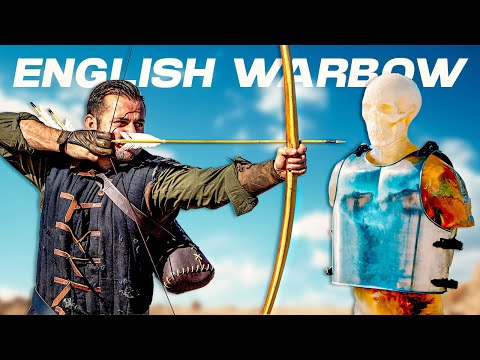
This video delves into the effectiveness of the English Warbow in medieval warfare, contrasting its capabilities with early firearms. It features practical demonstrations of draw weights up to 165 lbs and arrow weights of 1500 grains, testing penetration against chainmail and plate armor. The content highlights the extreme physical demands on archers and briefly touches on historical figures like Mad Jack Churchill, concluding that while longbows were formidable, firearms eventually prevailed due to reduced training requirements.
This video explores the historical evolution of warfare, contrasting pre-modern, medieval, and modern concepts of conflict. It delves into the philosophical underpinnings of war, referencing thinkers like Clausewitz and Keegan, and examines the changing nature of rules of engagement and the distinction between combatants and non-combatants across different eras. The discussion highlights the shift from total war to more limited forms and the eventual blurring of lines between civilian and military roles in contemporary conflicts.
This summer lecture from the Royal Armouries explores unconventional warfare as depicted in Elizabethan print. While the video's primary focus is historical and academic, it directly relates to the historical context of arms and armor, as highlighted by the channel's overall theme and explicit mention of this subject matter. The Royal Armouries is the UK's national collection of arms and armor, offering insights into historical combat, demonstrations, and expert knowledge.
This lecture by Dr. Keith Dowan from the Royal Armouries delves into the history and construction of medieval kite shields, focusing on two significant discoveries in Szczecin, Poland. The presentation details the archaeological context, dating methods, materials, and construction techniques of these shields, while also exploring the broader origins and evolution of the kite shield in medieval Europe. Dowan highlights the importance of these rare surviving examples for understanding medieval warfare and technology.
This video explores the historical development of gunpowder weapons in medieval England. It likely delves into the introduction of early firearms, their evolution, and their impact on warfare and society during that period. Expect to learn about the technological advancements, the types of weapons used, and how they changed military tactics.
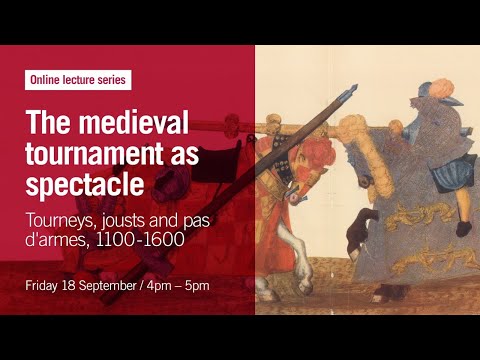
This video discusses the medieval tournament as a spectacle, focusing on jousts, tourneys, and pas d'armes between 1100 and 1600. Speakers Alan Murray, Karen Watts, and Martyn Lawrence, from the Royal Armouries, delve into how these events evolved from military training to elaborate displays of chivalry, often incorporating theatrical elements. They highlight the social and economic significance of tournaments, the diverse forms they took across Europe (e.g., Tudor 'Joust Royal', Burgundian 'pas d'armes', Imperial jousts), and the inherent dangers despite sophisticated armor. The video also promotes a book on the subject with a special discount code and encourages viewers to subscribe for more content on arms and armor.
This roundtable event, featuring Alan Murray and Karen Watts from the Royal Armouries, delves into the historical spectacle of medieval tournaments. It covers the evolution of tournaments from war training to a stage for young men to prove their worth, incorporating chivalric literature and theatrical elements. The discussion highlights diverse forms of jousting and 'pas d'armes' that emerged across Europe, the specialized equipment developed, and the inherent dangers of these events. The video also promotes a new book on the subject with a special discount offer for attendees.
This video from the Royal Armouries' Home Learning Hub focuses on catapults, covering their historical use and a DIY construction challenge. The content is designed to support home schooling and is presented by an education assistant. It aims to educate viewers about historical projectile launch technology and encourages hands-on learning.
This video from the Royal Armouries' Home Learning Hub focuses on Part 3 of Beowulf, exploring Saxon warfare and weaponry. It highlights the effectiveness of the Saxon 'shield wall' maneuver, the importance of spears, and the impressive armor mentioned in sagas. The Woolaston Helmet is specifically discussed as a significant piece of Saxon headgear, with a similar helmet appearing multiple times in the Beowulf saga. The video is aimed at supporting teachers and parents with home schooling, focusing on KS2 English and History curriculum.
This video features Scot Hurst, the Assistant Curator and 'knight in residence' at the Royal Armouries, answering viewer questions related to jousting and medieval tournaments. The content aims to demystify the practices and equipment involved in these historical combat sports, drawing from the museum's expertise and extensive collection of arms and armor. It serves as a behind-the-scenes look at the museum and its efforts to bring historical arms and armor to life.
Gun Laws by State
Read firearms regulations for all 50 states + D.C.
Find Gun Dealers
Search licensed FFL dealers near you.