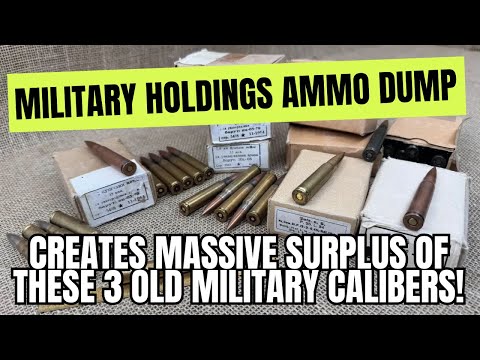
Ammunition prices are experiencing a significant drop across several calibers, with some approaching pre-2020 levels. This decline is attributed to increased production, low demand, and substantial military surplus dumps from Europe. The video details specific calibers and their current price points, offering insights into market trends for firearms owners.
This video from GFG discusses the significant drop in ammunition prices for eight specific calibers, with some approaching pre-2020 levels. The instructor attributes these price reductions to mass production, military surplus dumps, and decreased demand. The video provides current price points per round and per thousand rounds for each caliber, offering valuable insights for firearm owners looking to restock their ammunition supplies.
Countries are offloading large quantities of older military surplus ammunition into the US market, specifically in calibers like .30-06 Springfield, 8mm Mauser, and 7.62x54R. This influx is driven by military re-evaluations, global conflicts, and the logistical costs of storing obsolete ammunition. The result is significantly reduced prices, making these calibers a budget-friendly option for firearm owners who don't mind older ammunition.
Countries worldwide are offloading large quantities of older military surplus ammunition into the US market due to logistical costs and global conflict re-evaluations. This has created a significant surplus of three specific calibers: .30-06 Springfield, 8mm Mauser (7.92x57mm), and 7.62x54R. These calibers are generally no longer standard issue for modern militaries, making them available at significantly reduced prices, often pre-2020 levels.
The US Army sells ammunition to civilians primarily to maintain readiness and manage stockpiles. The Lake City Ammunition Plant, operated under contract by Winchester, produces large volumes of ammunition. Selling surplus or older stock to civilians prevents degradation and ensures the plant remains operational at a near-war capacity, allowing for regular updates to technology and increased output.
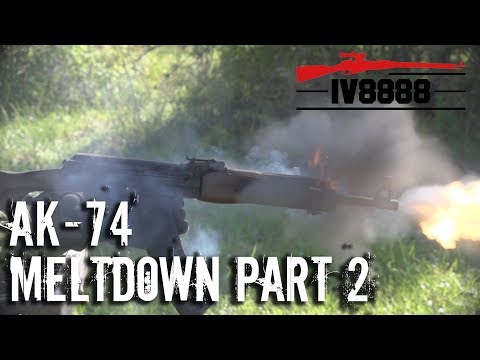
This guide details the procedure for conducting a firearms meltdown test, specifically on a Vepr 5.45x39 rifle, as demonstrated by Iraqveteran8888. The test involves continuous full-auto fire using military-grade ammunition until catastrophic failure, with an emphasis on monitoring heat buildup via thermal imaging and analyzing the failure point. The video highlights the rifle's durability, reaching 1,491 rounds before barrel rupture, and discusses manufacturing quality like its hammer-forged, chrome-lined RPK-style barrel.
This video tests the performance of Hornady 75 gr Steel Case Match ammunition in a windstorm. The reviewer shoots using their modified TNP SPR #2 rifle, with the wind being strong enough to damage the target holder. Despite the challenging conditions, the results might be surprising, suggesting the ammunition's capabilities are being evaluated under adverse circumstances.
This guide details a practical test of 7.62x54R military surplus ammunition's barrier penetration capabilities, using a Mosin Nagant rifle. The VSO Gun Channel demonstrates how this inexpensive round can effectively defeat concrete and thick steel, highlighting its potential for various applications. Proper firearm cleaning after using corrosive surplus ammo is also emphasized.
You've reached the end! 8 videos loaded.
Gun Laws by State
Read firearms regulations for all 50 states + D.C.
Find Gun Dealers
Search licensed FFL dealers near you.