This video showcases the destructive power of the M60 machine gun against oxygen tanks. The test results in a dramatic fireball and explosion due to the rapid combustion of escaping oxygen. The aftermath reveals significant damage to the tanks, with large entry and exit holes from the 7.62x51mm rounds.
This video showcases the destructive power of an M2 .50 caliber Browning machine gun against large propane and oxygen tanks. After a test fire, the tanks are detonated using a combination of the M2 and an AK-47, creating a massive explosion. The M60 machine gun is then used to further engage the burning wreckage, demonstrating the significant impact of .50 BMG rounds on heavy steel.
This video demonstrates the extreme danger of storing oxygen tanks in a refrigerator. When shot with a .45-70 rifle, a fire extinguisher ruptured violently. A subsequent .50 BMG round hitting an oxygen tank inside the fridge caused a massive explosion, destroying the appliance and igniting a fire, highlighting severe home safety risks.
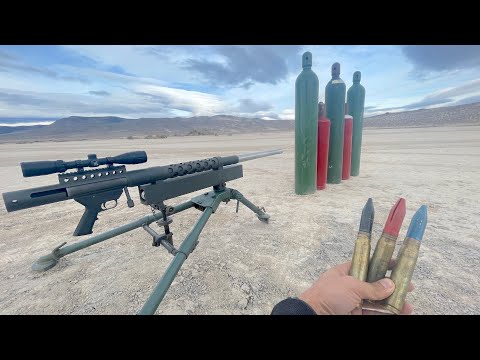
This video showcases the destructive power of a 20mm round fired from a Typhon 20 rifle against pressurized oxygen and acetylene tanks. The 20mm projectile demonstrated significant penetration, causing massive explosions and sending tanks flying. Even reinforced tank bases were penetrated or had rounds embedded, highlighting the extreme ballistic capabilities of this caliber.
This video demonstrates the extreme danger of storing oxygen tanks in vehicles, especially when exposed to high-caliber gunfire. While smaller rounds like 9mm and .45 ACP failed to ignite the tanks, a .50 BMG incendiary round caused a massive explosion and fire within the Ford Expedition. Despite the severe damage, the vehicle's engine surprisingly started afterward, highlighting the unpredictable nature of such events.
This video demonstrates the destructive power of a custom-built 20mm cannon, the Typhon 20, against oxygen and acetylene tanks. The 20mm round creates a massive fireball upon impacting the acetylene tank, melting the steel. Subsequent shots on oxygen tanks result in large explosions and significant debris. The post-impact analysis reveals thermal damage and deep craters, highlighting the extreme energy of the projectile.
This video details the explosive results of shooting compressed oxygen tanks with high-powered firearms. Initial tests with smaller calibers failed to penetrate, but .338 Lapua Magnum and .50 BMG API-T rounds caused massive fireballs and sustained torch effects due to the oxygen fueling combustion. The experiment highlights the extreme reactivity of oxygen and the destructive potential when combined with high-velocity projectiles.
You've reached the end! 7 videos loaded.
Gun Laws by State
Read firearms regulations for all 50 states + D.C.
Find Gun Dealers
Search licensed FFL dealers near you.