This video conducts a ballistic gel test of Hornady American Gunner 9mm XTP +P 124-grain ammunition fired from firearms with varying barrel lengths (3.3", 4.5", 7.5", and 10.5"). The test aims to observe the impact of barrel length on velocity, bullet expansion, and penetration depth in 10% ballistic gelatin. Results show significant expansion and penetration across all barrel lengths, with some surprising outcomes regarding wound cavity size and penetration depth between shorter and longer barrels.
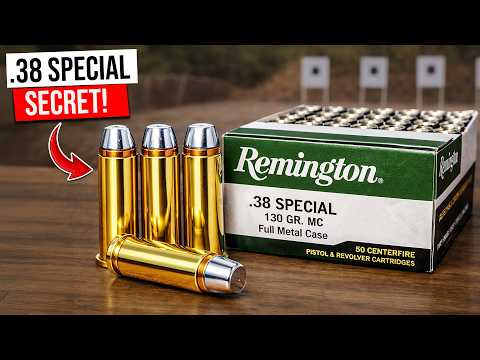
This video debunks common myths surrounding the .38 Special cartridge, highlighting its historical significance, surprising ballistics, and continued relevance in modern self-defense. It emphasizes that the .38 Special, especially with modern ammunition like jacketed hollow points and +P loads, remains a potent and controllable option, particularly in snub-nosed revolvers. The instructor stresses that shooter skill and proper shot placement are more critical for stopping power than caliber alone, and that revolvers, while generally reliable, require diligent maintenance to prevent malfunctions.
This video provides a detailed ballistic gel test comparing Federal Premium HST 9mm 124-grain standard pressure and +P ammunition. The test includes velocity readings, penetration depth, and expansion measurements after passing through a heavy clothing barrier. The instructor, experienced in firearms testing, demonstrates the performance of both ammunition types, concluding that both perform exceptionally well for self-defense.
This video provides an in-depth analysis of the .38 Special cartridge, challenging its reputation as outdated. It highlights the cartridge's historical significance in military and law enforcement, its modern performance data, and its practical advantages in reliability, manageability, and simplicity, especially in revolvers. The content emphasizes that modern ammunition has significantly improved the .38 Special's effectiveness for self-defense.
This video tests the performance of 9mm Federal HST 124gr Plus P ammunition across various barrel lengths, from 3 inches to 16 inches. It measures velocity, penetration, and expansion in Clear Ballistics gel, revealing how barrel length impacts terminal ballistics. The findings suggest that beyond approximately 7-9 inches, significant velocity gains diminish, and pushing the round too fast can lead to over-expansion and reduced penetration.
This video provides a detailed ballistic gel test and review of DoubleTap 9mm +P 147 Grain Bonded Gold Dot ammunition. The instructor, with clear expertise in firearms testing, evaluates the ammunition's performance across two different barrel lengths: a 3.1-inch Canik Mete MC9 and a 4.5-inch Glock 17. The testing includes velocity measurements via chronograph and terminal ballistics analysis in ballistic gel, assessing expansion and penetration.
This video details a ballistic gel test of Buffalo Bore's .380 ACP +P ammunition, featuring Barnes Tac-XP solid copper projectiles. The test measures velocity from two Smith & Wesson firearms (Bodyguard 2.0 and M&P EZ) and evaluates projectile expansion and penetration through a clothing barrier. The presenter concludes that while the ammunition offers good energy for its caliber, its high cost and performance comparable to less expensive options make it a questionable value proposition for most users.
This video tests Nosler Defense Bonded 9mm Plus P 124-grain ammunition with a tipped bonded projectile. The testing involved ballistic gel with a heavy clothing barrier to simulate self-defense scenarios. Velocities were measured using a Lab Radar chronograph, and terminal performance was evaluated through expansion and penetration in gel blocks. The results indicated underwhelming expansion and significant penetration, leading to a mixed assessment of the ammunition's effectiveness for its price point.
This video provides a detailed ballistic gel test of Hornady Critical Duty 9mm +P ammunition fired from a 16.3-inch barrel Henry Homesteader carbine. The test compares the 124-grain and 135-grain variants, measuring velocity, penetration, and expansion. The instructor, with apparent expertise in ballistics testing, concludes that Critical Duty performs consistently well from a carbine platform, offering good penetration without over-expansion.
This video tests CorBon 9mm ammunition, initially believed to be 125-grain Plus P. However, ballistic testing revealed the rounds were actually 147-grain projectiles, mislabeled and mispackaged. The test showed poor velocity and zero expansion from both a Canik MC9 and a Glock 17, with significant penetration but no terminal performance.
This video details a ballistic gel test of Federal Premium HST 230-grain .45 ACP ammunition, both standard pressure and +P, fired from a short-barreled Glock 30. The test aimed to evaluate expansion and performance characteristics, particularly at velocities achievable from shorter barrels. Results indicated that velocities around 800 feet per second are near the minimum threshold for proper HST expansion, with performance being inconsistent across different rounds.
This video tests Magtech Guardian Gold .45 ACP Plus P 230-grain ammunition using ballistic gel. The testing reveals significantly lower velocities than advertised, with averages of 884 fps from a 4.25-inch barrel and 940 fps from a 5-inch barrel. The ammunition failed to expand in ballistic gel tests, resulting in complete pass-throughs of both gel blocks, indicating poor performance for self-defense or hunting applications.
Gun Laws by State
Read firearms regulations for all 50 states + D.C.
Find Gun Dealers
Search licensed FFL dealers near you.