The speaker discusses preferences for handguns, specifically favoring .357 Magnum revolvers for their stopping power and round capacity in certain scenarios. They express a preference for shorter barrels, generally between 3 to 4.25 inches, prioritizing carryability and practicality over longer barrels, though they acknowledge carrying a 2.5-inch barrel model.
This video demonstrates the impact of barrel length on muzzle velocity using .38 Special ammunition. A 1.8-inch barrel Ruger LCR and a 6-inch barrel Ruger GP100 were tested. The results show a significant velocity difference between the two barrel lengths, highlighting how barrel length affects projectile speed.
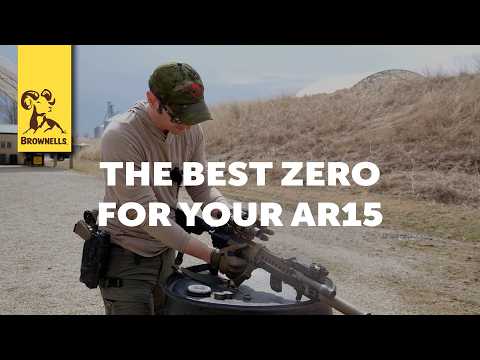
This video from Brownells, featuring Caleb, explores the optimal zero distances for an AR-15, primarily for competition use. It analyzes four common zero distances: 25, 36, 50, and 100 yards, detailing their impact zones on an IPSC A-zone target at various ranges. The instructor emphasizes that the 'best' zero is dependent on the intended use of the firearm and the optic employed, recommending the 100-yard zero as a versatile option for experienced shooters, while suggesting 36 or 50 yards for those using red dots or LPVOs respectively, especially for closer engagements.
This guide details the process of fitting and trimming an aftermarket rail intended for a 6-inch barrel Colt Python to a 4-inch barrel model. The primary challenge is the difference in barrel ramp angles, which prevents a flush fit. The process involves cutting the rail to size and applying a finish to the exposed metal.
This video features competitive shooter Anthony Matarese Jr. discussing the practical aspects of shotgun selection for sporting clays, emphasizing what truly matters versus marketing hype. He highlights the importance of a proper fit, including recoil pad function for length of pull adjustment and the benefits of an adjustable comb. Matarese also touches on the subjective but impactful nature of palm swells, the nuances of barrel length and rib design for optimal sight picture, and a proficiency-based approach to choke selection. The discussion underscores that while high-end features can refine performance for advanced shooters, fundamental gun fit and shooter skill are paramount.
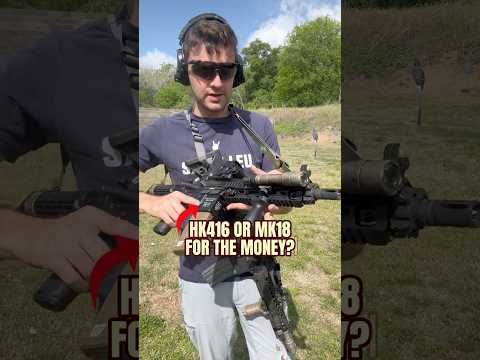
This video compares the HK 416D and the Colt/Daniel Defense Mark 18 as potential "SPR" (Special Purpose Rifle) main builds. It details the components and estimated costs for each, highlighting the 416D's higher price point attributed to its brand name. The Mark 18 build features a Colt M4 lower, Daniel Defense upper, and a 10.3-inch Colt barrel with a RIS-2 rail, costing approximately $3500-$4000. The 416D build uses a true HK 416 upper, an MR556A1 lower, and an HK 416D barrel, with an estimated cost of $4500-$5000.
This video discusses the trade-offs between different AR-15 barrel lengths, specifically comparing a standard 16-inch rifle to a shorter 11.5-inch setup. The presenter highlights the maneuverability benefits of shorter barrels for applications like CQB, home defense, and use as a truck gun, while acknowledging the 16-inch as a reliable standard.
This video discusses optimal barrel lengths for semi-automatic carry pistols, suggesting that anywhere between 4 and 6 inches is generally suitable. The speaker notes that modern ammunition with fast-burning powders minimizes the impact of barrel length on performance for most calibers beyond 4 inches.
This video provides a detailed comparison between M855 'green tip' and M193 'ball' 5.56x45mm ammunition for realistic self-defense and SHTF scenarios. It analyzes their performance based on projectile weight, velocity, penetration, fragmentation, and barrel length, offering guidance on choosing the appropriate round for different rifle configurations and tactical considerations. The speaker, with extensive military experience, emphasizes practical application over theoretical performance.
This video explores the distinction between AR-15 SPR (Special Purpose Rifle) and GPR (General Purpose Rifle) concepts. It clarifies that SPRs were designed for enhanced accuracy over standard GPRs, often involving specialized uppers and ammunition. However, modern advancements mean that well-configured GPRs can now achieve SPR-level performance, emphasizing that the rifle's setup should align with the user's mission rather than strict definitions.
This video conducts a ballistic gel test of Hornady American Gunner 9mm XTP +P 124-grain ammunition fired from firearms with varying barrel lengths (3.3", 4.5", 7.5", and 10.5"). The test aims to observe the impact of barrel length on velocity, bullet expansion, and penetration depth in 10% ballistic gelatin. Results show significant expansion and penetration across all barrel lengths, with some surprising outcomes regarding wound cavity size and penetration depth between shorter and longer barrels.
Gun Laws by State
Read firearms regulations for all 50 states + D.C.
Find Gun Dealers
Search licensed FFL dealers near you.