This review dives deep into the Wraithworks CarbonMax CM-1, a rifle built around an innovative monolithic carbon fiber upper receiver. Senior Engineer Josh Gore explains the advanced composite bonding, thermal properties, and design choices aimed at reducing weight and improving performance. The video highlights unique features like the non-reciprocating charging handle and adjustable gas block, while also transparently discussing prototype development and future production plans.
This video provides an expert-level look at the T44 LMG prototype, a unique hybrid combining German FG42 and MG42 components. Ian McCollum details the historical context, design challenges, and mechanical modifications required to create this precursor to the M60. The analysis highlights the intricate gunsmithing involved in integrating disparate weapon systems.
This video details the process of creating custom knives and axes, from initial hand-forging of prototypes by Daniel Winkler to modern production techniques. It highlights the collaboration between Winkler Knives and military professionals like Kevin, emphasizing the need for durable, high-performance tools. The process involves traditional blacksmithing, waterjet cutting for blanks, precision grinding, and heat treatment, all aimed at producing reliable equipment for demanding applications.
This guide details the design and prototyping of a high-capacity helical magazine, drawing inspiration from historical designs like the Lewis and Bren guns. It covers the mechanical principles for reliable feeding, the use of SolidWorks for precise CAD modeling, and considerations for future scaled-up, gear-driven versions intended for custom firearms. The speaker, Hoffman Tactical, demonstrates advanced knowledge in firearm accessory design and fabrication.
This entry details the rare Prototype 7.7mm Arisaka Type 99 Carbine, presented by Ian McCollum of Forgotten Weapons. It covers the historical context of Japan's shift to 7.7mm, the specific features of this prototype including its unique muzzle brake and recoil-absorbing buttplate, and its provenance as a captured WWII firearm. The assessment highlights the instructor's high authority and detailed knowledge of Japanese firearms development.
This entry delves into the true origins of the M1 Carbine, debunking the myth of David Marshall 'Carbine' Williams as the sole inventor. It highlights the critical contributions of a dedicated Winchester team, including William Bromer and Fred Humeston, who met extreme deadlines and overcame significant technical challenges. The information is presented with historical context and technical detail, drawing from expert analysis.
This video details the remaining steps to complete the AK-50 prototype (v5). Key tasks include fabricating and installing the firing pin, cam lug, and cam group, drilling and pinning the barrel extension, and setting the gas port and block. The presenter emphasizes the complexity and ongoing development of this 50 BMG AK platform rifle.
This guide details the assembly and functionality checks for the AK-50 V5 prototype, as presented by lead designer Brandon Herrera. It emphasizes the critical cycling, extraction, and feeding capabilities of this iteration, crucial for its progression towards a production model. Herrera's expertise as the project owner is evident in the technical explanations.
This video details the challenges encountered during the development of the AK-50 V5 prototype, specifically focusing on warped receiver rails that prevented its readiness for Shot Show. Lead instructor Brandon Herrera explains the design choices, including the justification for a cast receiver in this specific application due to the barrel extension bearing the primary stress. The update highlights the commitment to transparency in sharing both successes and failures.
This entry details the complex development process of the AK-50 rifle, as explained by Brandon Herrera. It covers prototype evolution (V1 to V4), significant machining challenges requiring advanced CNC capabilities, and the strategic adoption of modularity and new manufacturing techniques like DMLS. The focus remains on critical safety components and the self-funded nature of this ambitious project.
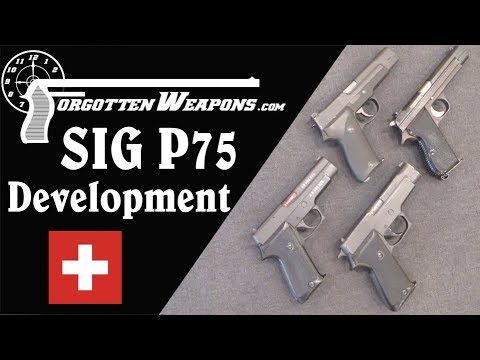
This entry details the development of the SIG P220, adopted by the Swiss Army as the P75. It highlights the pistol's innovative construction, including its folded sheet metal slide and alloy frame, designed to reduce production costs compared to its predecessor, the P49 (SIG 210). The guide covers its technical specifications, design evolution through prototypes, and specific variants like the Swiss Customs model.
You've reached the end! 11 videos loaded.
Gun Laws by State
Read firearms regulations for all 50 states + D.C.
Find Gun Dealers
Search licensed FFL dealers near you.