This video from GBRS Group features DJ Shipley and Cole Fackler discussing the psychological aspect of overcoming fear, particularly in high-stress situations. They explain that true mastery comes not from eliminating fear, but from developing a mindset that shifts from reactive to proactive, driven by extreme confidence in team capabilities and a healthy respect for fear's role in maintaining sharpness.
This video explores the psychological difference between facing fear and chasing risk, suggesting that engaging in challenging activities can foster personal growth. It introduces a principle of progressive engagement, often referred to as 'crawl, walk, run,' emphasizing a rational approach to overcoming apprehension. The content aims to differentiate between genuine courage and recklessness, encouraging viewers to embrace growth through calculated challenges.
This YouTube video, titled "Dealing with Survivor's Guilt," is an exclusive offering on the GBRS GROUP Patreon. The description heavily promotes their Patreon page for exclusive content and perks, and also provides links to their website and various social media channels on Instagram, TikTok, Facebook, and X. The content itself is not directly related to firearms, but is presented by a group known for firearms and tactical content.
This video features Chase Hughes, an authority on behavior and influence, explaining how the human brain is not designed to seek objective truth. Instead, it functions like a defense attorney, prioritizing the confirmation of existing beliefs and biases. This neurological wiring is highlighted as a key factor in the effectiveness of social media algorithms and the difficulty individuals face when confronted with information that contradicts their established viewpoints.
Instructor Mike, an established thought leader in the tactical and self-defense community, delivers a philosophical and motivational message. He challenges conventional definitions of success and failure, encouraging viewers to embrace a 'loser' or 'lame' identity as a path to self-discovery and genuine peace. The core message emphasizes shedding learned emotional burdens and toxic social influences to cultivate self-worth and intellectual pursuits.
This video from the Shawn Ryan Show explores the concept of lifespan, contrasting biological age with 'experiential age.' Host Shawn Ryan, drawing on his background and the guests' discussions, questions the feasibility of significantly extending biological life in the near future. Instead, he introduces the idea of increasing one's 'experiential age' by being fully present and engaged in life, making time feel richer and more expansive.
Instructor Mike explains that taking parenting classes can be a form of self-reparenting, offering a way to learn essential skills missed during one's own upbringing. He counters the common cultural notion that there's no parenting manual by highlighting the existence of resources based on the science of human growth and development.
This video delves into the subtle genius of the FedEx logo, highlighting the hidden arrow formed by negative space. The speaker, with high authority, explains how this design element reinforces the company's core mission of movement and delivery, demonstrating a sophisticated understanding of marketing and design psychology.
This video, from the Shawn Ryan Show, explores the distinctions between mentalism and magic. It aims to educate viewers on the nuances of these performance arts, differentiating the psychological manipulation and suggestion used in mentalism from the illusions and trickery characteristic of magic. The description also includes various links for channel membership, Patreon support, and podcast subscriptions, alongside relevant hashtags like #PODCAST and #MINDBLOWN.
This video from the Shawn Ryan Show features mentalist Oz discussing his viral clips, particularly those involving NFL players like Joe Burrow. Oz emphasizes the importance of genuine reactions in his performances to maintain credibility with tough football audiences. He also addresses skepticism about his acts being scripted, highlighting his work with high-profile clients as proof of his authenticity.
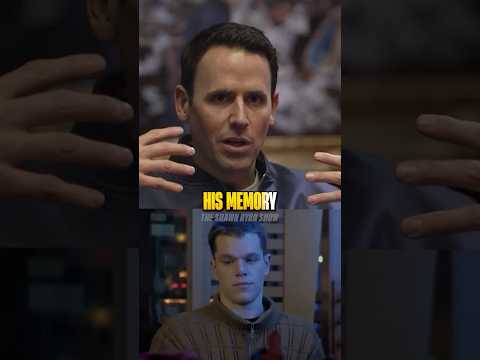
This entry explores the concept of hyper-concentrated situational awareness, drawing parallels between fictional characters like Jason Bourne and real-world skills possessed by mentalists and military operators. Host Shawn Ryan, a former Navy SEAL/CIA contractor, and guest Oz Pearlman, a professional mentalist, discuss how intense observation and rapid assessment of surroundings are crucial for survival and performance in high-stakes environments. The discussion highlights the cognitive processes involved in quickly analyzing people, objects, and environmental details, emphasizing its application beyond fictional narratives.
This video, titled "Why I love (and can't handle) conflict," is an announcement for a live stream scheduled for 6 PM Pacific. Based solely on the title and description, it's unclear if the video itself will feature firearms content. The title suggests a discussion about personal tendencies towards conflict, which could be metaphorical or literal. Without a transcript or visual information, it's impossible to determine the specific firearms, calibers, manufacturers, topics, or gear that might be discussed or showcased during the live event. Therefore, the tags and category are based on potential interpretations of the title in a firearms context, acknowledging the lack of direct evidence.
Gun Laws by State
Read firearms regulations for all 50 states + D.C.
Find Gun Dealers
Search licensed FFL dealers near you.