This video reviews 16 suppressor-ready firearms, highlighting their features for optimal sound suppression. It covers a range of pistols and rifles, including the FNX45 Tactical, Ruger Mark IV Tactical, and Springfield Armory Saint Victor, discussing their suitability for various applications like home defense, pest management, and survival scenarios. The emphasis is on factory-threaded barrels, suppressor-height sights, and calibers that naturally perform well with suppressors, such as .45 ACP and .300 Blackout.
This guide details the operation of the Remington Rolling Block rifle, a robust and historically significant single-shot firearm. It covers the loading and action-locking mechanism, emphasizing its simplicity and reliability. The video highlights its global adoption due to its mechanical excellence and ease of manufacture, making it a common choice for nations without extensive domestic arms industries.
This guide details the technique for rapidly firing a Remington Rolling Block rifle, as demonstrated by Ian McCollum. It focuses on the "swiping action" used to cycle the breech for quick reloads and emphasizes safe firearm handling. The demonstration highlights the potential rate of fire for this historical single-shot rifle.
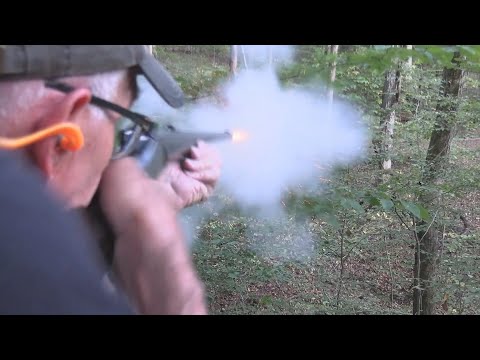
This video showcases a Remington Rolling Block rifle in .45-70 Government during a 'turkey shoot' event. Expert shooter Hickok45 demonstrates the rifle's operation, the effects of black powder, and its effectiveness as a 'brush caliber' in a wooded environment. The content highlights historical firearm use and practical shooting techniques.
This guide details the identification and basic handling of the rare Papal States Remington Rolling Block rifle, a 12.7x45mm single-shot firearm produced by the Nagant brothers. It covers key markings, caliber, sights, and the rolling block action, emphasizing historical context and collector significance. Instruction is provided by Ian McCollum, demonstrating high expertise in historical firearms and their mechanics.
This April 2022 Q&A session from InRangeTV covers a wide range of firearms-related topics. Key discussions include practical advice on transporting firearms for competitions, the market viability of 10mm PCCs, and the advantages of suppressed subsonic rifles over crossbows. The host also delves into historical firearms like break-top revolvers and the M1 Garand's clip system, alongside modern firearm maintenance and tactical considerations like gas blowback mitigation and the effectiveness of Zap Carry. The session emphasizes the importance of community and safety in shooting sports and touches upon the challenges of expanding match formats.
This episode of Sunday Shoot a Round features a discussion and shooting of a Colt 1860 Army converted to .45 Colt, a Glock 23 Gen 4 in .40 S&W, and a brief look at historical firearms like the 1855 Springfield. The host reflects on the longevity of calibers like .40 S&W and the historical significance of Civil War firearms, while also touching on personal reflections and the importance of critical thinking.
This guide details the process of shooting an original 1880s Remington Rolling Block rifle using historically accurate black powder .45-70 cartridges. It covers loading, firing, and observing the unique characteristics of black powder, such as the large smoke plume. The video also humorously contrasts this vintage firearm with a modern Glock. Instruction is provided by Hickok45, an expert known for his safe firearm handling and historical knowledge.
This lecture explores the impact of colonial warfare on the French Foreign Legion's traditions, using captured weapons from a 1908 Moroccan campaign as a focal point. It details the historical context of French expansion in North Africa, the nature of low-intensity conflict, and the evolution of the French Foreign Legion Museum's role from a regimental archive to a bridge between military and civilian society. The analysis of specific weapons, a Mukala musket and a Remington Rolling Block rifle, highlights trade routes, manufacturing origins, and the adaptation of local forces to European weaponry.
This Q&A session from InRangeTV covers a wide array of firearms-related topics, from training methodologies and optic choices to historical firearms and modern self-defense considerations. The host discusses the effectiveness of .22LR conversion kits versus dedicated .22LR rifles for marksmanship training, offers insights into VOMZ optics, and weighs the merits of the 1911 against the 1917 revolver for self-defense. Practical advice is given on reloading black powder cartridges in the field, the historical context of the 'Mares Leg,' and the practicality of various handgun and rifle platforms for everyday carry and home defense. The discussion also touches on the challenges of historical accuracy in firearms representation, the evolution of firearm design, and the importance of community in survival scenarios.
This guide details the process of creating paper-patched ammunition for the 40-50 Sharps Bottleneck rifle. It covers casting bullets, preparing and applying paper patches, forming cases from 45-70 brass, and the specific steps for loading with black powder, wads, and lubricant. The technique aims for accurate shooting with historical rifle designs.
This Q&A session from Forgotten Weapons covers a range of firearms topics. Ian McCollum discusses the potential of balanced recoil systems, the obsolescence of the 8mm Kurz cartridge in favor of 7.62x39mm, and historical attempts to chamber M1 Carbine-style actions in .223. He also touches on the challenges of modern gunsmithing, the M14's quality control issues, the safety of Carcano actions, and the viability of AR-10s as scout rifles. The discussion extends to the effectiveness of large bore rifles against WWI armor, the practicality of silver bullets, and the operational differences between the MG 34 and MG 42.
Gun Laws by State
Read firearms regulations for all 50 states + D.C.
Find Gun Dealers
Search licensed FFL dealers near you.