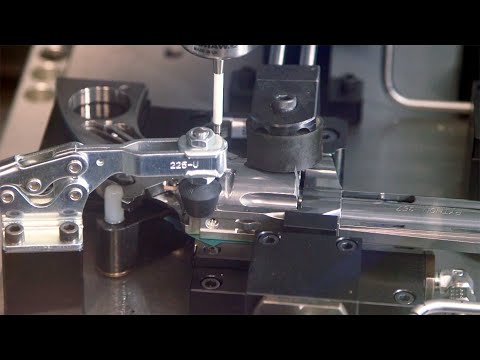
This video discusses why unfluted revolver cylinders can sometimes cost more than fluted ones, despite requiring less machining. The speaker argues that manufacturers may charge a premium for unfluted cylinders as a perceived aesthetic choice, similar to how whitewall tires were once an optional extra. The manufacturing process for both types of cylinders is largely the same, with the unfluted version actually involving one less step.
This video provides an expert-level comparison between Charter Arms and Ruger revolvers, with the speaker, Edward Howerton, asserting that Charter Arms falls significantly short of Ruger in terms of materials, construction quality, finishing, and overall production. Howerton, drawing on his experienced authority, explains that while both brands may use casting methods like investment casting or lost wax, the execution and underlying processes differ drastically, leading to a primitive manufacturing approach for Charter Arms compared to Ruger's superior methods.
This video provides an expert-level overview of the modern manufacturing techniques employed by Colt to revive its iconic heritage revolvers. Featuring insights from Paul Spitale, Director of Production, and Justin Baldini, Senior VP of Marketing, it details how CNC machining, material science, and redesigned actions enhance the strength, ergonomics, and performance of models like the Python, Cobra, King Cobra, and Anaconda. The focus is on maintaining classic aesthetics while integrating modern engineering for superior reliability and shootability.
This guide provides an overview of the manufacturing process for Smith & Wesson revolvers, from raw material forging to advanced CNC machining and meticulous hand-finishing. It highlights key models across various frame sizes (J, K, L, N, Z, X) and showcases the specialized work of the Performance Center and engraving shop. The information is presented with high authority, featuring insights from NRA's American Rifleman and Smith & Wesson's General Manager.
This guide details the expert-level manufacturing process of the Manurhin MR-73 revolver at Chapuis Armes. It highlights the blend of advanced CNC machining and meticulous hand-fitting required to achieve the revolver's renowned quality and finish. The process emphasizes precision from raw forging to final test firing, ensuring adherence to strict quality control and CIP standards.
The Yankee Marshal debunks the myth that new Colt Pythons are inferior due to not being hand-fit. He explains that modern CNC machining offers superior precision and interchangeability compared to historical hand-fitting, which was a necessity due to less precise manufacturing. While acknowledging the smoothness of vintage Colts, he argues modern designs like those in the King Cobra and Cobra are more durable and practical for carry, and that hand-fitting today would be prohibitively expensive without functional benefit.
This video delves into the complex history of 'Brevete' Colt revolvers, which are licensed and unlicensed copies of Samuel Colt's designs. Ian McCollum, a recognized expert, explains the nuances of patent law, international manufacturing, and the varying quality of these historical firearms, ranging from high-quality licensed pieces to poor-quality counterfeits. The discussion highlights the evolution of Colt's patent enforcement and the impact of patent expiration on the market.
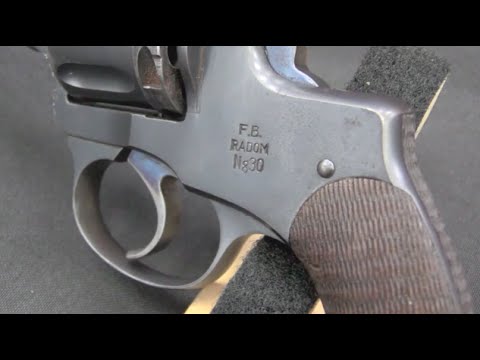
This entry details the Polish Ng30 Nagant revolver, a variant manufactured by FB Radom in Poland based on Russian 1895 Nagant designs. Expert Ian McCollum highlights its superior finishing compared to Russian counterparts, its adoption by Polish police forces, and its unique gas-seal mechanism. Approximately 21,000 units were produced between 1928 and 1939.
You've reached the end! 8 videos loaded.
Gun Laws by State
Read firearms regulations for all 50 states + D.C.
Find Gun Dealers
Search licensed FFL dealers near you.