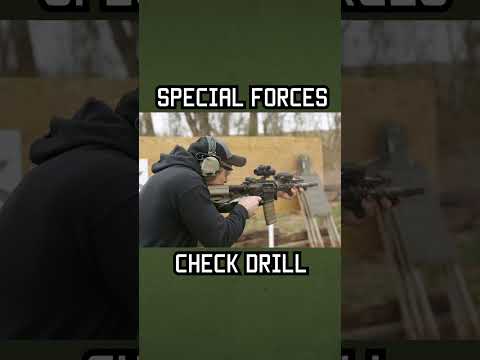
This video details the 'Check Drill,' an advanced firearms training exercise designed to integrate pistol and rifle skills under pressure. It emphasizes the critical combat scenario where a rifle may become inoperable, requiring a swift transition to a pistol, followed by the ability to quickly re-establish the rifle as the primary weapon. The drill highlights the importance of safe pistol re-holstering and efficient rifle reloads, simulating real-world tactical engagements.
This video details a combat rifle reload drill designed to test a shooter's ability to quickly and efficiently replace an empty magazine under pressure. The drill emphasizes building muscle memory for gear placement and performing the reload from various ready positions, culminating in re-acquiring the target for a follow-up shot within a strict time limit.
This video demonstrates the 'tactical reload' technique, a method for reloading a firearm during a lull in combat while retaining partially loaded magazines. The instructor emphasizes maintaining a grip on the firearm, creating a pocket to remove the old magazine, and storing it in a secondary location to avoid interference. The technique is presented as a way to maintain readiness without expending partially loaded magazines.
This video showcases advanced firearm manipulation and reloading techniques demonstrated by Tetiana Gaidar, an expert associated with Taran Tactical. It covers rapid reloads and transitions between a shotgun, pistol, AR-15 style rifle, and a Pistol Caliber Carbine (PCC), highlighting high-level competitive shooting skills. The content is geared towards experienced shooters looking to improve speed and efficiency under pressure.
This expert guide from Tactical Rifleman breaks down the critical decision-making process between reloading a rifle and transitioning to a pistol. The instructor emphasizes that the optimal choice depends heavily on distance to the threat and the availability of cover. At longer distances (100m), reloading the rifle is paramount, while at close ranges (10m) without cover, a pistol transition is faster and more effective than dealing with potential rifle malfunctions.
This compilation showcases expert-level firearm reloading techniques across various platforms, including the Kel-Tec Sub2000, 1911, CZ 75 SP-01, Luger, and Glock. The experienced instructor demonstrates proficient handling and efficient reloads at an outdoor range, engaging steel targets. The video emphasizes smooth transitions and effective magazine changes, highlighting the importance of practice for maintaining shooting continuity.
This video demonstrates the 'foolproof rifle setup method' using an ammo quiver or saddle, which ensures immediate access to ammunition. The technique is shown on a Mossberg 590 shotgun and a Henry lever-action rifle, highlighting its versatility for various firearm types. This method is presented as a reliable way to maintain operational readiness, even if the firearm's primary feeding system is empty or unprimed.
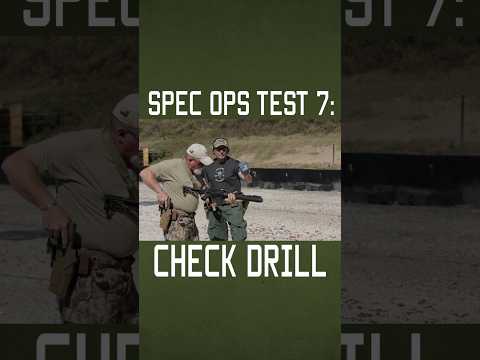
This video demonstrates the Special Forces Check Drill, a critical training exercise for maintaining offensive capability during a rifle malfunction or ammunition depletion. The drill involves shooting two rounds, transitioning to a pistol for one shot, assessing the rifle, performing a tactical reload, and engaging the target again. It emphasizes immediate action and seamless transitions between primary and secondary weapons.
This tactical guide from Tactical Rifleman explains the critical decision-making process between reloading a rifle and transitioning to a pistol during a self-defense scenario. It emphasizes that the choice depends heavily on distance to the threat and the availability of cover. The instructor, demonstrating expert knowledge, advises reloading at longer distances (100m) or when cover is present at closer ranges (10m), but advocates for a swift pistol transition at close range (10m) without cover, especially when facing potential rifle malfunctions.
This YouTube Short addresses a common reloading and firearm handling question: whether to retain or discard a magazine after performing a tactical or speed reload. The video aims to educate viewers on best practices for magazine management during a reload, likely demonstrating different scenarios and techniques. The content is concise, as indicated by the '#shorts' tag, and focuses on a practical aspect of firearm operation relevant to shooters and reloads.
Clint Morgan differentiates between tactical and speed reloads. Tactical reloads involve topping off a partially depleted magazine during a lull, retaining the original magazine. Speed or combat reloads are for immediate re-engagement when the firearm is dry, prioritizing speed over magazine retention. The decision hinges on the urgency of the situation and the availability of cover.
This video demonstrates the Special Forces Check Drill, a critical training exercise for maintaining offensive capability when ammunition is depleted. It covers the immediate transition from a rifle to a pistol after firing two rounds, followed by a tactical reload of the rifle to re-engage the target. The drill emphasizes speed and efficiency in weapon handling under pressure.
Gun Laws by State
Read firearms regulations for all 50 states + D.C.
Find Gun Dealers
Search licensed FFL dealers near you.



![Gotta reload to keep shooting [Compilation PART 134]](https://i.ytimg.com/vi/t8wv8P2zrok/hqdefault.jpg)