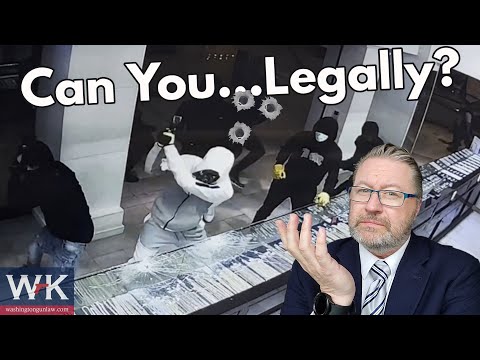
This video from Washington Gun Law, hosted by expert William Kirk, analyzes whether one can legally shoot a perpetrator during a smash-and-grab robbery. It details the legal framework for using lethal force, emphasizing that it's generally permissible only when there's an imminent threat of death or serious bodily injury to oneself or others, or when a violent felony is being committed upon one's person. The analysis distinguishes between defending property and defending life, highlighting that using lethal force solely to protect property is typically unlawful.
This video from Washington Gun Law TV, hosted by William Kirk, explains the legal framework surrounding the use of lethal force against a home intruder. It clarifies that while a homeowner has the right to use necessary, reasonable, and proportional force, lethal force is generally justified only when facing an imminent threat of death or serious bodily injury, or when a felony is being committed within the home. The video emphasizes the distinction between a trespasser and a burglar, noting that a residential burglary elevates the legal justification for lethal force.
This video analyzes a carjacking scenario, emphasizing the legal justifications for using lethal force. It clarifies that carjacking is legally considered robbery, a violent felony, and can justify lethal force if there's an imminent threat of death or serious bodily injury to oneself or others. The presenter, William Kirk of Washington Gun Law, highlights the importance of situational awareness and understanding the rules of engagement for self-defense.
This video from Washington Gun Law TV discusses the legal justification for using lethal force in self-defense against a carjacker, using a scenario from South Africa as a hypothetical. Host William Kirk explains that carjacking is legally considered robbery, a serious violent felony. He details the conditions under which lethal force is permissible in Washington State, emphasizing necessity, reasonableness, and proportionality, and concludes that using lethal force against an armed carjacker is justified.
This video analyzes a self-defense incident where an 80-year-old store owner, Craig Cope, used lethal force against armed robbers. It details Washington State's legal framework for using force, specifically RCW 9A.16.020 and RCW 9A.16.050, outlining when lethal force is justified. The analysis emphasizes that imminent threats of death, serious bodily injury, or the commission of a felony are key legal justifications.
This video analyzes a self-defense incident in Greenwood, Seattle, focusing on Washington State law regarding the use of force. It clarifies that while a homeowner can use reasonable force to remove a trespasser, lethal force is only justified when there's an imminent threat of death or serious bodily injury, or if a felony is being committed inside the home or upon a person. The analysis highlights the critical distinction between defending property and defending life.
This video explains Washington State law regarding the use of deadly force against a home intruder. It clarifies that while RCW 9.81.020 allows for reasonable and proportional force, lethal force is generally not permitted solely for property defense under RCW 9.81.050. However, the law allows for lethal force if a felony is being committed in one's home, such as residential burglary, even if the intruder's initial intent was theft.
In Washington State, the use of lethal force is strictly prohibited for the sole purpose of defending property. While reasonable and proportional force can be used to protect property, lethal force is only justified when there is an imminent threat of death or serious bodily injury to oneself or others, or in specific circumstances like a felony being committed inside one's home. This distinction is crucial for understanding legal self-defense parameters.
In Washington State, the use of deadly force against a home intruder is legally justifiable under specific circumstances outlined in RCW 9.16.050. This includes situations where there is a reasonable belief of an imminent threat of death or serious bodily injury, or when resisting an attempt to commit a felony in one's dwelling. The law differentiates between defending property and defending oneself or others from harm.
This video, featuring Washington Gun Law President William Kirk, clarifies the legal parameters for using deadly force to defend property in Washington State. It emphasizes that under RCW 9A.16.010, deadly force is permissible only when facing an imminent threat of death or serious bodily injury. Consequently, using deadly force solely for property defense is not legally sanctioned in Washington. The discussion also touches upon how the legal justification for using force can evolve if the threat escalates beyond a threat to property. Links to relevant Revised Code of Washington (RCW) statutes and other informative YouTube videos on self-defense laws in Washington are provided.
William Kirk of Washington Gun Law explains the legal framework for using deadly force in Washington State. He emphasizes that force must be necessary, reasonable, and proportional. Deadly force is defined as intentional application of force likely to cause death or serious physical injury. Homicide is justifiable if committed in lawful defense against an attempted felony or great personal injury, with imminent danger of its accomplishment, or in resistance of a felony attempt within one's dwelling.
You've reached the end! 11 videos loaded.
Gun Laws by State
Read firearms regulations for all 50 states + D.C.
Find Gun Dealers
Search licensed FFL dealers near you.