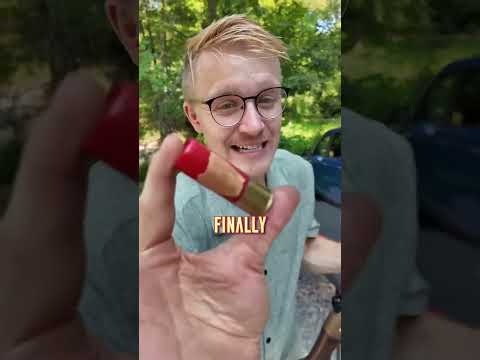
This video demonstrates the impact of different shotgun chokes on birdshot patterns at 15 yards. It highlights how constricting the choke significantly tightens the shot spread, with reductions in pattern size observed between choke types. The presenter suggests using different chokes on a double-barreled shotgun for varying target distances, such as a wider choke for closer targets and a tighter choke for farther ones.
This video, a "Throwback Thursday" revisiting an older "slugfest" with the Mossberg 590 A1, demonstrates the effectiveness and surprising accuracy of 1 oz. Foster slugs fired from a smoothbore, cylinder-bore shotgun. Hickok45 highlights their utility as a "poor man's rifle" for hunting and defensive applications, showcasing their impact on various targets and discussing their ballistic properties. The video emphasizes that even with a simple bead front sight, accurate shooting is achievable at moderate ranges, challenging common misconceptions about slug performance in smoothbore barrels.
This guide details a method for testing the effectiveness of WWI-era buckshot, drawing on historical reports and empirical live-fire evaluation. It emphasizes safety and careful analysis of results, as demonstrated by Ian McCollum of Forgotten Weapons. The process involves understanding historical context, preparing vintage ammunition and firearms, conducting controlled tests at specific distances, and analyzing target impact patterns to assess performance.
This entry details the Benelli Super Black Eagle 3 shotgun's Advanced Impact (AI) system, focusing on its technical components and benefits for waterfowl hunting. The AI system, featuring a modified forcing cone, extended chokes, and a larger bore, is designed to enhance shot pattern density and downrange velocity, leading to cleaner kills. Expert insights from American Hunter contributors highlight the system's effectiveness in field performance.
This video demonstrates the lethality and accuracy of a 13mm socket fired from a shotgun. The projectile, when shot into ballistic gelatin, created a significant wound channel, indicating high energy transfer. Testing on paper confirmed the projectile flew straight without significant rotation, suggesting precision.
This video discusses a specific 25-ounce Caliber 12 shotgun shell, branded 'Seismic,' which the presenter refuses to fire again due to extreme recoil. While acknowledging that lighter and even 'Magnum' loads are manageable, the sheer weight of the Seismic projectile requires a highly specialized powder charge for safe firing. The presenter strongly advises against attempting to fire such heavy loads without proper expertise and specialized ammunition.
This video demonstrates a cost-effective method for creating homemade 7/8 oz shotgun slugs from common lead birdshot. The process involves preparing spent shells, melting and casting lead into projectiles, and then assembling them into new cartridges. The presenter highlights significant cost savings and reduced recoil compared to commercially available slugs, while also testing their accuracy and terminal performance.
This video demonstrates the significant impact of ammunition type and distance on shotgun patterns. It highlights how different loads, from birdshot to slugs, behave uniquely when fired from a cylinder bore shotgun at 10 and 20 yards. The instructor emphasizes the importance of range testing to understand your specific shotgun and ammunition combination for effective application, particularly in defensive scenarios.
This video explores 17 different types of 12-gauge shotgun ammunition, demonstrating their effects. It covers various slug weights (0.5 oz, 1 oz, 2.5 oz), buckshot (simple and double), and birdshot sizes (2 through 8). The instructor highlights the recoil differences between loads, noting Magnum and Double-X Magnum rounds as particularly powerful.
This video tests the common myth that shotguns are only effective at short ranges. The G-Force 12 Hammer shotgun was tested at 10, 50, 100, and 150 yards. While accuracy was rough at 50 yards, it was significantly degraded by 100 yards, with no hits on target after 50 rounds.
This video explains why using overly tight choke tubes with steel shot can negatively impact shotgun patterns and potentially damage the firearm. Steel shot's inability to deform like lead causes it to fight the choke, leading to over-pressure situations and erratic flyers. The explanation details how the steel compresses and then expands upon exiting the barrel, inducing forces that disrupt the flight path.
This video demonstrates the buckshot pattern performance of a Mossberg 590 Shockwave using 12-gauge Double-Op Buckshot at 10 and 15 feet. The presenter visually assesses the spread of pellets at each distance, providing a practical look at the shotgun's effectiveness at close range.
Gun Laws by State
Read firearms regulations for all 50 states + D.C.
Find Gun Dealers
Search licensed FFL dealers near you.