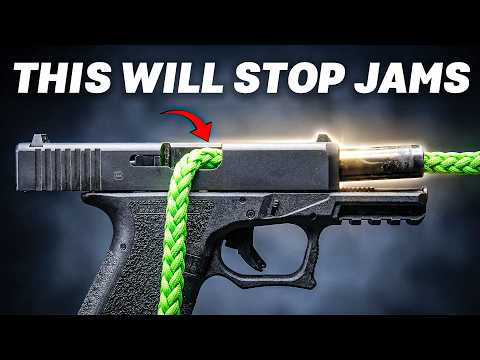
This video details the process of cleaning Glocks that have reached a point of malfunction due to extreme round counts and neglect. Ben Stoeger explains that his Glock 47s, with tens of thousands of rounds each and aftermarket Apex triggers, eventually stopped functioning reliably in cold weather and with lighter ammunition. He describes field stripping, cleaning slide rails, and addressing striker channel issues as necessary steps when firearms reach this state.
Tim from Military Arms Channel provides expert guidance on maintaining a carry gun, emphasizing the benefits of silicon-based Battle Born Grease over traditional oils for its non-drying and non-running properties. He demonstrates proper application techniques on high-wear areas and advocates for specific cleaning tools like nylon brushes and brass jags for bore maintenance, alongside Breakthrough Clean CLP for overall protection. This practical advice from an established subject matter expert ensures reliable firearm function.
This guide details five essential methods for cleaning a pistol without full disassembly, emphasizing reliability and maintenance. Instructor Jessie Harrison, with high authority, covers critical areas like the chamber, feed ramp, barrel, action, and exterior lubrication. The techniques are designed to prevent malfunctions caused by grit and carbon buildup, ensuring the firearm is ready for use.
This guide details an experimental test conducted by Civilian Tactical to assess the functionality of a Beretta-style pistol when lubricated with Loctite 243 threadlocker. The experiment involved applying the threadlocker to internal components, allowing it to set, and then attempting to fire the weapon. The results indicated a complete failure to cycle, rendering the firearm inoperable due to the adhesive properties of the threadlocker. This highlights the critical importance of using appropriate firearm-specific lubricants.
This guide details the field stripping, cleaning, and reassembly process for the Springfield Armory XD-M Elite pistol. It emphasizes safety checks, proper disassembly steps including lever rotation and slide removal, and thorough cleaning of components like the barrel, slide, and frame. The reassembly process is then covered, focusing on correct component alignment and securing the slide.
This guide details the field stripping and cleaning process for a Glock pistol, presented by Jason. It emphasizes safety by first ensuring the firearm is unloaded. The steps cover disassembling the slide, barrel, and recoil spring assembly, cleaning each component with a toothbrush and paper towel, and applying lubricant to the slide rails and barrel. Reassembly and a crucial function check are also demonstrated, making it a comprehensive beginner's guide to Glock maintenance.
This review of the Remington RP9, presented by a firearms expert with a technical background in mechanical failures, highlights significant design flaws and reliability issues. The analysis includes detailed mechanical breakdowns, comparisons to industry standards, and practical range testing that reveals critical problems with the slide stop and feeding mechanism, ultimately leading to a negative recommendation.
This guide details the proper lubrication points for a Ruger SR-9 pistol before final reassembly. It emphasizes using lubricant sparingly, focusing on wear points like slide rails, the barrel's contact areas with the slide, and the trigger bar/connector interface. Excessive oil is discouraged as it can attract debris and hinder function.
This expert guide from Brownells details the lubrication process for a Beretta 92 pistol, focusing on critical wear points to ensure smooth operation. It emphasizes using quality gun oils and applying them precisely to areas like slide rails, the barrel, and the hammer/trigger mechanism. Proper lubrication is key to maintaining the reliability of this popular firearm.
This guide details the proper lubrication points for a Smith & Wesson M&P pistol before final reassembly. It emphasizes using a minimal amount of quality gun oil on critical wear points like slide rails, the barrel, and the trigger bar to ensure smooth operation and prevent dirt accumulation. Excessive oil is cautioned against as it can attract debris.
This guide, presented by an expert instructor from Brownells, details the proper lubrication procedure for Springfield XD and XDM pistols before reassembly. It emphasizes focusing on key wear points like slide rails and the barrel, while cautioning against over-lubrication to prevent dirt accumulation. The instructor notes that these firearms are not particularly finicky about specific oils, recommending any good quality gun oil.
This guide details the proper lubrication points for a Glock firearm prior to reassembly. It emphasizes using minimal lubricant, focusing on key wear points such as slide rails, barrel contact areas, and the trigger bar. Over-lubrication is discouraged as it can attract dirt and fouling.
Gun Laws by State
Read firearms regulations for all 50 states + D.C.
Find Gun Dealers
Search licensed FFL dealers near you.