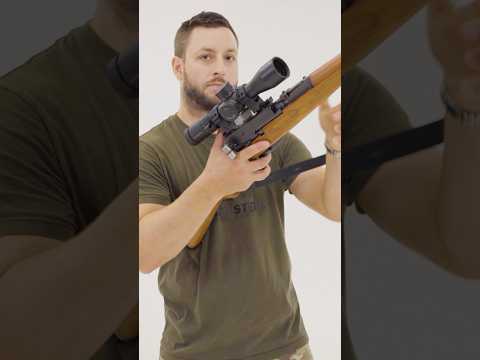
This video provides a practical demonstration of sporterizing a Swiss Karabiner 31 (K31) rifle, a task undertaken by Ziga from Polenar Tactical. The modification involves mounting an optic to enhance the rifle's utility beyond its original military role. The expert-level instruction highlights the K31's straight-pull bolt action and its potential for customization.
This guide details the process of sporterizing a Swiss K31 rifle, focusing on improving accuracy through glass bedding and scope mounting. The expert instruction from Polenar Tactical emphasizes non-permanent modifications to preserve historical value while enhancing performance. Key steps include stock preparation, precise bedding, and the installation of modern optics.
This guide, presented with high authority by a specialist in historical firearms, details the 'Bubba' phenomenon – amateur modifications that devalue collectible rifles. It categorizes these modifications from reversible 'ethical' jobs to destructive 'cocaine Bubba' alterations, emphasizing the importance of preservation and the financial implications of restoration. The content highlights specific examples like the Swedish M41B, Finnish M39 Mosin Nagant, and Type 99 Arisaka.
This guide details the specific modifications made to the M1917 Enfield rifle for use in Greenland, as explained by Ian McCollum. Key changes include replacing robust military sights with simpler, snow-resistant open sights and modifying the front sight for easier zeroing, crucial for hunting in harsh Arctic conditions. The removal of bayonet lugs is also noted.
This video focuses on a project to 'de-bubba' a Lee-Enfield No. 4 MK1* rifle. The term 'de-bubba-ing' implies removing non-original or aesthetically unpleasing modifications that have been made to a firearm, often referred to as 'sporterizing' military surplus rifles. The creator acknowledges the irony of this, referencing past experiences with a Mosin rifle, framing this project as a form of atonement. The video is the first part of a series, suggesting a detailed process of restoration and modification.
This guide details the process of modifying a military Mauser 98 magazine follower for sporterizing, a common practice to improve functionality. Larry Potterfield from MidwayUSA demonstrates how to bevel the rear of the follower from its original 90-degree angle to a 45-degree angle, similar to commercial versions. This modification is crucial for ensuring smooth bolt closure when the magazine is empty. The process involves simple filing techniques, making it an accessible gunsmithing task for enthusiasts.
This video details the final fitting and finishing stages of sporterizing a Mosin Nagant rifle. Expert instructor demonstrates techniques for stock modification using tools like a Dremel and files, followed by sanding and applying a True Oil finish. Key component upgrades include a Huber Concepts trigger and Rock Solid hardware, culminating in scope mounting and boresighting.
This guide details the process of inspecting and refining a steel bed job on a Mosin Nagant sporterization project. Expert Iraqveteran8888 demonstrates how to check the bedding, address cosmetic imperfections, and reassemble the action for improved accuracy and aesthetics. The video emphasizes careful application of bedding compounds and proper curing times for optimal results.
This guide details the advanced gunsmithing process of bedding a sporterized Mosin Nagant rifle's stock using Brownell's Steel-Bed. It covers stock preparation, pillar installation, precise application of release agents and bedding compound, action seating, and curing. The instruction emphasizes critical steps for a strong, reliable bedding job, suitable for experienced rifle builders.
This guide details the process of inletting a Mosin Nagant stock to accommodate a bent bolt handle, a common modification for sporterized rifles. The video demonstrates the use of a hand file to carefully remove material, ensuring proper bolt clearance and function. It highlights the importance of precise work for a smooth operation, drawing on the expertise of a seasoned gunsmith.
This guide details the process of fitting a Boyd's Pepper Laminate stock to a Mosin Nagant rifle, a common sporterization modification. It covers essential steps like chamber cleaning and precise stock inletting using a rotary tool. The instruction emphasizes the need for careful test-fitting and minor adjustments for a professional, stress-free fit, drawing on the expertise demonstrated by Iraqveteran8888.
This guide details the metal finishing and stock fitting process for sporterizing a Mosin Nagant rifle. It covers removing the barrel dovetail, shaping the barrel, applying a zinc phosphate (Parkerizing) finish, and preparing a laminate stock with pillar bedding and free-floating techniques. The instruction comes from Iraqveteran8888, demonstrating experienced gunsmithing practices.
Gun Laws by State
Read firearms regulations for all 50 states + D.C.
Find Gun Dealers
Search licensed FFL dealers near you.