This video details the complex process of reverse-engineering and fabricating a replacement transfer bar for an Astra Model 400 (also known as Model 1921) pistol. The instructor demonstrates techniques for shaping spring steel, creating precise bends, and fitting the part to ensure proper interaction with the trigger, sear, and magazine safety mechanism. The process involves careful measurement, metalworking, and iterative fitting to overcome the lack of readily available parts for this vintage firearm.
This video reviews the Glock FM 81 Survival Knife, highlighting its features such as a saw on the blade back, a polymer sheath, and its polymer grip available in multiple colors. Specifications for weight, grip material, and blade construction are provided, including blade length, material (Spring steel), hardness (HRC ~ 55), and coating (electrophoretic). A link to the official Glock product page is included, along with an invitation to join the channel for exclusive perks.
This video details the expert-level process of fabricating a replacement mainspring for an 1812 Springfield lock. The instructor, Mark Novak, demonstrates the intricate steps of shaping, welding, heat-treating, and tempering spring steel. Key techniques include forming the spring's geometry for optimal leverage, carefully controlling heat during bending and welding, and achieving the correct hardness and flexibility through precise quenching and tempering in a lead pot. The process emphasizes understanding the functional requirements of the spring within the lock mechanism.
This review covers the Glock Field Knife, highlighting its budget-friendly price point (around $30) and durable Glock quality. It details the differences between the FM 81 (with sawtooth) and FM 78 (smooth spine) models, noting their origins as military issue knives, including bayonet functionality for the Steyr AUG. The review emphasizes its suitability for survivalists and preppers, while acknowledging limitations as a primary chopping tool.
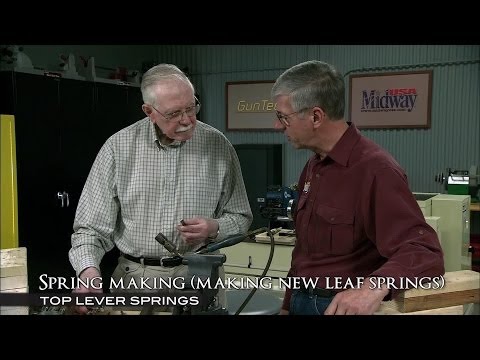
This guide details the advanced gunsmithing process of creating new leaf springs for British side-by-side shotguns, as demonstrated by English-trained gunsmith Jack Rowe. The process involves shaping spring steel bar stock, heat treating, hardening, and tempering to achieve the correct tension and elasticity. This technique is crucial as replacement springs are often unavailable.
This guide details the process of crafting custom turn screws for gunsmithing. It emphasizes using quality spring or tool steel, shaping the tip to precise dimensions for specific gun screws (historically 16 or 20 thousandths of an inch slot width), and tapering the shank for handle insertion. The video demonstrates using files for shaping, highlighting the importance of a well-fitting tool for preventing damage to firearm screws.
Master Gunsmith Jack Rowe demonstrates the intricate process of crafting a replacement lever spring for firearms. This expert-level guide covers identifying different spring types, selecting appropriate materials like 3/32 flat spring steel, and employing precise techniques involving heating, bending, and hammering to achieve a functional and durable component. Rowe emphasizes when it's more practical to purchase a spring versus undertaking a custom fabrication.
This review of the Glock 81 Survival Knife highlights its practical design and durable construction. The speaker, an established gear reviewer, details the knife's spring steel blade with a Rockwell hardness of 55, its polymer handle made from the same material as Glock pistol frames, and its bayonet-style thrusting design. Key features include a hollow handle compartment, a phosphate-treated blade, and a sheath with MOLLE compatibility. The review also touches on its origin in Austria and its competitive pricing.
You've reached the end! 8 videos loaded.
Gun Laws by State
Read firearms regulations for all 50 states + D.C.
Find Gun Dealers
Search licensed FFL dealers near you.