This guide details the disassembly and reassembly of the Stamm-Saurer Model 1907 rifle's bolt, a process described by Ian McCollum. It highlights the Mauser-style end cap and the helical camming mechanism. Proper disassembly is crucial for cleaning and maintenance, especially for rare historical firearms.
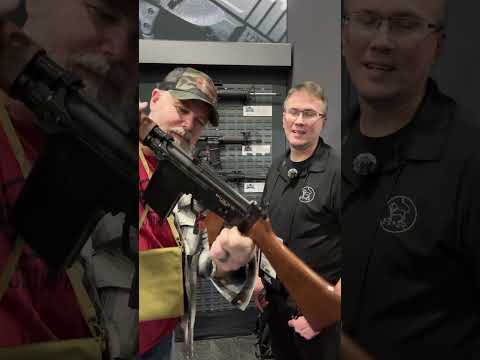
This video provides an in-depth look at Palmetto State Armory's (PSA) upcoming T48 trials rifle, a reproduction of the rifle that competed against the M14 for US service. The T48, a collaboration with DSA and branded under Harrington & Richardson (H&R), aims to be an authentic replica with period-correct markings and features. While pricing and exact release dates are pending, PSA and H&R are targeting a 2025 release, emphasizing their commitment to retro firearm production.
This entry details the Bang Model B1 self-loading rifle, a 1930s Danish design by Søren Hansen Bang. Expert Jonathan Ferguson of the Royal Armouries highlights its innovative short-stroke gas piston system and unique bolt lock safety. Despite its promising design, the rifle faced reliability issues during trials, ultimately being surpassed by later designs like the M1 Garand.
This guide details the disassembly of the Money-Walker 1868 Trials Rifle, focusing on its unique falling block action. It highlights the process of removing the barreled action from the stock to expose the internal mechanism, offering insights into its historical design and operation. The information is presented with the authority of a firearms instructor knowledgeable in historical military procurement.
This comprehensive review of the Lee-Enfield No1 MkV SMLE, presented by Ian McCollum of Forgotten Weapons, delves into its historical context as a 1920s trials rifle. McCollum, demonstrating high expertise, highlights its unique aperture sights, production details (20,000 units, 1922-1924), and the evolution of British rifle design influenced by its Bisley trials feedback, ultimately shaping the No4 rifle.
This guide details the field stripping process for the rare Vickers-Berthier Model 1919 Trials Rifle, as demonstrated by Ian McCollum. It covers the disassembly of the gas-operated, tilting bolt system, emphasizing the unique control levers that function as disassembly pins. Proper safety precautions are paramount when handling this historical prototype.
This guide details the examination and disassembly of a rare Canadian Experimental Lightweight No4 Enfield rifle, as presented by Ian McCollum. It highlights significant weight-reduction techniques, including extensive milling, an aluminum trigger guard, and a one-piece stock. The analysis emphasizes the trade-offs between weight savings and potential durability concerns, offering insights into a unique firearms development trial.
This guide details the disassembly and reassembly of the British EM-2 bullpup rifle, as demonstrated by Ian McCollum. It covers field stripping, removing the bolt assembly, gas piston, trigger housing, and recoil spring. The video highlights the rifle's complex milled receiver and flapper locking system, emphasizing the need for careful handling during maintenance.
You've reached the end! 8 videos loaded.
Gun Laws by State
Read firearms regulations for all 50 states + D.C.
Find Gun Dealers
Search licensed FFL dealers near you.