This video discusses LPVO (Low Power Variable Optic) sizing and application for AR platforms. It highlights the Triton Ronin (1-6x, 20mm tube) as a compact, budget-friendly option suitable for PCCs or AR pistols. The Primary Arms SLX (1-6x, 24mm tube) is presented as a slightly larger alternative. For long-range applications, the Monstrm Beast (3-18x, 50mm objective) is mentioned, though noted as exceeding typical LPVO magnification.
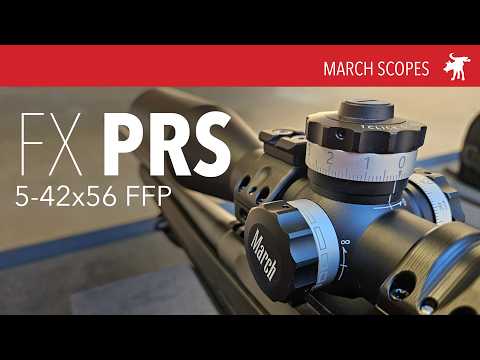
This video provides an in-depth review of the March FX 5-42x56 PRS Edition scope, highlighting its design for Precision Rifle Series (PRS) competitions. It details the scope's high magnification range, large objective lens, robust 34mm tube, and unique features like writable turrets and a precise zero stop. The review also discusses the reticle design and optical performance at various magnifications, offering insights for competitive shooters.
This Hatchet Cast episode focuses on guiding viewers in selecting the optimal optic for their firearms. Eric and Roy discuss key considerations, including price, matching optics to rifle capabilities, tube diameter, objective lens size, and night vision compatibility. The video also touches on current market trends, the ideal number of optics, the pros and cons of 45-degree offset red dots, and self-quality control for optics, providing resources for further information. Affiliate discount codes and information on training and upcoming competitions are also featured.
This video provides an expert-level comparison of rifle scopes, featuring Joel from Precision Rifle Network. It delves into the diminishing returns of scope pricing by testing the Swampfox Warhawk ($700) against the Tract Toric ELR ($1700) using an USAF 1951 resolution chart and real-world distance evaluations. The analysis highlights differences in glass quality, chromatic aberration, and edge-to-edge clarity, concluding that while the Swampfox is a capable optic for its price, the Tract offers superior performance critical for advanced long-range precision shooting.
This video explains the critical factors influencing light transmission in rifle scopes, debunking common misconceptions. It clarifies that tube diameter and objective size do not directly affect light transmission. Instead, light transmission is primarily determined by the number of lens elements, the quality of coatings that minimize reflection and maximize transmission, and the reduction of glare. The discussion also covers how larger tube diameters (30mm and 34mm) offer greater adjustment travel for long-range shooting, a feature often driven by military requirements, while standard 1-inch tubes are sufficient for most hunting scenarios.
You've reached the end! 5 videos loaded.
Gun Laws by State
Read firearms regulations for all 50 states + D.C.
Find Gun Dealers
Search licensed FFL dealers near you.