The video discusses the ongoing search for the perfect concealed carry handgun, with the speaker having used a Sig P365 as their primary for six years. They are planning to upgrade their P365 by adding a Spectrum comp for recoil reduction and an optics-ready slide. The speaker is seeking community input on an optic choice, with Vortex and Holosun being the primary contenders. They also mention a Shadow Systems MR920 as a secondary carry option that is considered too large for frequent use.
This guide details modifications to the Springfield Echelon to enhance its shooting performance and ergonomics. Key upgrades include slide porting by 365 Weapons for reduced recoil, installation of a Sauer Wolf EDG enclosed optic, and a Tyrant Arms raised slide catch to resolve accidental slide lock issues. Further enhancements involve frame stippling, a Tyrant Arms trigger, a modified magazine release, and tactical tape for improved grip, making the Echelon a top-tier handgun for the presenter.
This guide details how to replace a standard front sight with a taller one to achieve proper alignment with a Colt Anaconda/Kodiak rail, enabling functional iron sights for co-witnessing with a red dot optic or for use without an optic. The process involves precise measurement and installation of a Harrison Designs front sight to match the height of the modified rail.
This guide details the considerations for mounting red dot sights on rifles, comparing top-mounted versus 45-degree offset configurations. Instructor Mike Odow emphasizes that while personal preference plays a role, understanding the impact on cheek weld, weapon manipulation, and effective range is crucial. The 45-degree offset offers a consistent cheek weld but has limitations at distance, while top-mounting requires adapting to a new cheek weld position.
This video provides essential information for potential buyers of the HK licensed Umarex .22LR MP5 SD. It covers common issues like ammunition sensitivity, the firearm's front-heavy balance due to the faux suppressor, potential feed lip fragility, and cleaning limitations imposed by warranty. The presenter shares personal positive experiences despite these reported concerns, highlighting its fun factor as an affordable range toy.
This guide details the process of zeroing a handgun optic, emphasizing the reduction of shooter error by using a stable rest. It covers firing initial groups, calculating adjustments based on optic specifications, and making incremental changes to achieve a precise point of impact at a recommended 25-yard distance, while acknowledging the impact of environmental factors like wind.
The FN Proview is introduced as the first micro orthographic red dot sight from FN Herstal. It utilizes 'image guide technology' to create a true orthographic sight, meaning the dot is an image of the light source rather than a reflection. This simplifies the optical path, enhances optical quality, and provides clear, tint-free, flat glass that eliminates aberrations. Developed initially for pistols due to their demanding nature, the Proview is designed to be lightweight, compact, and robust, representing FN's long-term strategy for integrated weapon solutions.
This video details an everyday carry (EDC) setup for a father of three, emphasizing practical tools for self-defense and daily life without appearing overtly tactical. The presenter, a homeschooled dad, highlights comfortable yet functional clothing, essential EDC items like a knife and pepper spray, a versatile flashlight, a trauma kit for emergencies, and his preferred firearm and holster combination. The focus is on balancing preparedness with a casual lifestyle.
This video explains the advantages of red dot sights on handguns, contrasting them with traditional iron sights. Instructor Ben Stoeger details how red dots offer a single-plane aiming solution, simplifying focus on the target and improving speed and accuracy, especially at distance or under stress. The discussion also covers the subjective preference for red versus green dot colors, noting that while green may 'pop' more due to eye sensitivity, it can also be distracting for some, whereas red is often perceived as less attention-grabbing and more natural in outdoor environments. The importance of training with optics to leverage their benefits is emphasized.
This video from Brownells, featuring Caleb, explores the optimal zero distances for an AR-15, primarily for competition use. It analyzes four common zero distances: 25, 36, 50, and 100 yards, detailing their impact zones on an IPSC A-zone target at various ranges. The instructor emphasizes that the 'best' zero is dependent on the intended use of the firearm and the optic employed, recommending the 100-yard zero as a versatile option for experienced shooters, while suggesting 36 or 50 yards for those using red dots or LPVOs respectively, especially for closer engagements.
This video critiques the advice of a social media personality regarding point shooting with red dot sights. The instructor emphasizes that effective red dot shooting involves focusing on the target, bringing the gun to the eyeline, and confirming sight alignment, even at close distances. He argues that relying solely on point shooting without sight confirmation is a disservice to new shooters and can lead to accountability issues, especially under stress.
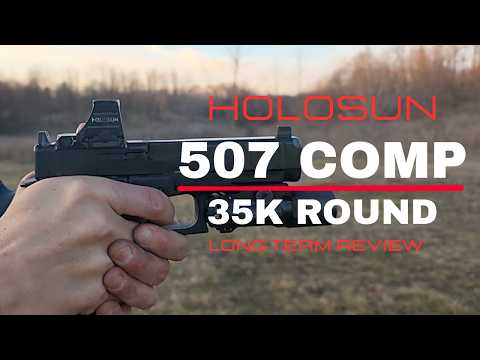
This comprehensive review by Regular Guy Training LLC details the performance of the Holosun 507 Comp after 35,000 rounds. The instructor highlights its robust reliability, consistent turret performance, and suitability for duty and competition. However, limitations in brightness and battery life, particularly with the circle-only reticle, are noted as potential drawbacks for some users. Despite these minor issues, the optic is deemed a solid, proven performer, especially compared to other open-emitter designs.
Gun Laws by State
Read firearms regulations for all 50 states + D.C.
Find Gun Dealers
Search licensed FFL dealers near you.