The Colt Franklin rifle, with only 50 units manufactured, underwent US Army and Navy trials in 1887-1888, firing approximately 4,000 rounds without significant issues. Despite its performance, the military did not place an order, likely due to concerns about the delicate, exposed box magazine being susceptible to damage by enlisted men. Most of these rifles were subsequently destroyed, with their survival attributed to a dedicated Colt collector.
The US Army's XM17 modular handgun trials sought a replacement for the Beretta 92, with stringent requirements for accuracy, ergonomics, reliability (10,000 rounds between failures), and modularity. While Glock submitted the 19X, it was deemed 'acceptable' rather than 'good' primarily because it did not meet the modularity requirement as effectively as the Sig Sauer P320. The P320's trigger pack design allowed for easier configuration changes, making it a more cost-effective modular solution for the Army's large-scale procurement.
The US Army rejected the Glock 19X for the XM7 Modular Handgun System trials primarily because it was not considered a true modular handgun system as required. While Glock offered a solution with interchangeable slides and grips, it necessitated purchasing multiple firearms to achieve different configurations, unlike the SIG P320's removable trigger pack design. This modularity, combined with cost considerations, led the Army to select the P320.
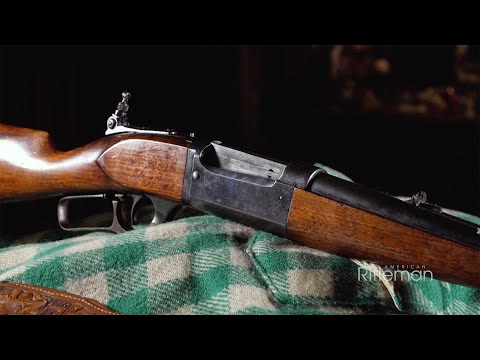
This video explores the history and technical innovations of the Savage Arms Model 99 lever-action rifle. It highlights Arthur Savage's genius in design and business, focusing on the rifle's unique rotary top-loading magazine, which allowed for the safe use of spitzer bullets and versatility in rechambering. The discussion also covers its distinction as the first hammerless lever-action rifle and its initial chambering in .303 Savage.
This video provides an expert-level deep dive into Heckler & Koch's ambitious G11 project, featuring rare footage from the HK Grey Room. James Williamson, a recognized expert on HK history, details the G11's revolutionary caseless ammunition, hyper-burst fire capability, and its development as a potential M16 replacement. The content highlights the weapon's advanced design, rigorous testing, and the reasons for its eventual cancellation, offering significant insights for firearms enthusiasts and historians.
The US Army rejected the Glock 19X for the XM17 Modular Handgun System trials primarily because it was not a true modular handgun system as required. While Glock offered a configuration that mimicked modularity by combining different slide and grip sizes, it necessitated purchasing multiple pistols. Sig Sauer's P320, with its removable trigger package, met the modularity requirement more effectively, allowing for configuration changes with additional components at a lower overall cost per soldier.
This video showcases a collection of historically significant firearms, emphasizing their original factory condition. The presenter, with clear expertise, details the unique features and historical context of each piece, including Lugers from US Army trials and commercial production, Mauser pocket pistols, a Walther PP, and two exceptionally preserved German rifles (a G33/40 and a K98k). The focus is on the aesthetic and mechanical integrity of these firearms as they left the manufacturer, highlighting details like straw bluing, fire bluing, and original wood finishes.
This guide details how to identify early Colt 1911 pistols, focusing on unique features of the first dozen manufactured. It covers slide markings, grip checkering, internal numbering, finish types, and the significant discovery of owner inscriptions. The information is presented with the authority of a firearms expert, emphasizing historical context and collectible value.
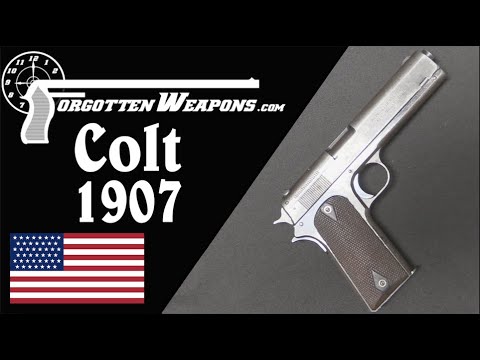
This video from Forgotten Weapons, hosted by Ian McCollum, provides an in-depth look at the Colt Model 1907, a crucial prototype in the development of the M1911 pistol. McCollum, a recognized expert in historical firearms, details the pistol's design evolution, its participation in demanding US Army trials, and the reasons for its eventual obsolescence despite its significance. The entry highlights the technical specifications, historical context, and the pistol's status as a rare collector's item.
This video provides an expert-level examination of the rare Barnekov Greene Prototype Carbine from 1870, presented by Ian McCollum of Forgotten Weapons. The analysis details its unique open-bolt, toggle-lock action, its participation in the 1872 US Army trials, and the design's eventual withdrawal due to mechanical and safety issues. The carbine's historical context and mechanical intricacies are thoroughly explained, highlighting its place as a significant, albeit unsuccessful, piece of firearm development.
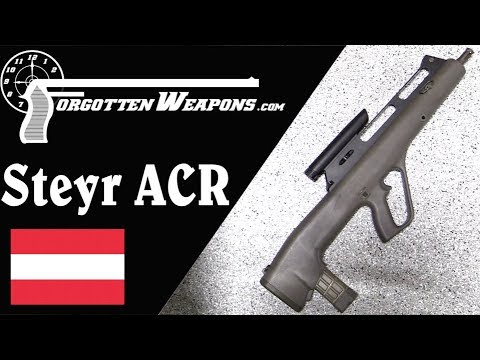
This expert-level review from Ian McCollum of Forgotten Weapons details the Steyr ACR, a 1990s bullpup rifle developed for the US Army's Advanced Combat Rifle program. It highlights the rifle's unique flechette ammunition, advanced action, and integrated optic, while also discussing its performance in trials and its ultimate outcome.
This video provides an in-depth look at the Colt 1907 Trials Pistol, a significant precursor to the M1911. Ian McCollum of Forgotten Weapons details its design evolution from John Browning's earlier work, its participation in US Army trials, and the mechanical issues that led to its eventual refinement into the M1911. The expert analysis highlights specific markings, modifications, and the unique twin-link barrel system, offering a deep dive for firearm enthusiasts.
You've reached the end! 12 videos loaded.
Gun Laws by State
Read firearms regulations for all 50 states + D.C.
Find Gun Dealers
Search licensed FFL dealers near you.