The Howard Thunderbolt, a compact lever-action carbine produced by Whitneyville Armory between 1866-1870, featured a unique one-finger lever and a .44 Rimfire chambering. Despite its innovative design, it failed commercially due to its single-shot nature competing against surplus repeating carbines post-Civil War. Only about 1,700 units were made, with most surviving examples being rifles.
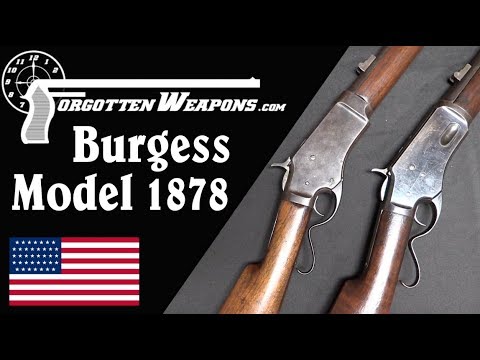
This video provides an expert-level deep dive into the Burgess 1878 Military Carbine and Sporting Rifle, presented by Ian McCollum of Forgotten Weapons. It details Andrew Burgess's innovative lever-action design, its production by Whitneyville Armory, and its competition against Winchester in Army trials. The review highlights the unique locking bar mechanism, caliber capabilities (.45-70 Government), and the reasons for its limited commercial success, including jamming issues and ammunition sensitivity.
Ian McCollum, a recognized expert in historical firearms, details the Whitney-Kennedy Lever Action Rifle. The video covers the armory's origins with Eli Whitney, its competitive drive against Winchester, and the rifle's specific mechanical features like the L-shaped block and top-ejecting action. It also touches on barrel markings and serial number locations, positioning the rifle as an important, though often overlooked, part of early lever-action firearm development.
You've reached the end! 3 videos loaded.
Gun Laws by State
Read firearms regulations for all 50 states + D.C.
Find Gun Dealers
Search licensed FFL dealers near you.