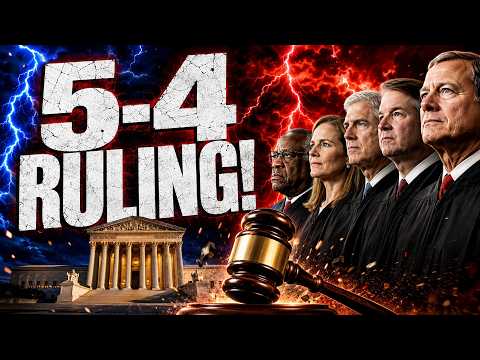
Supreme Court Issues 9-0 Unanimous Decision Changing Second Amendment & 4th Amendment Fight!

Published on August 12, 2025
Duration: 11:19

The Supreme Court unanimously ruled in Barnes v. Felix that excessive force claims under the Fourth Amendment must be analyzed using the totality of the circumstances, rejecting the 'moment of threat' doctrine. This decision requires courts to consider all facts and circumstances relating to an incident, not just the immediate moment of perceived danger. This broadens the scope for evaluating law enforcement conduct and its impact on constitutional rights, particularly for gun owners in interactions with police.

Quick Summary

The Supreme Court's 9-0 unanimous decision in Barnes v. Felix mandates that excessive force claims under the Fourth Amendment be evaluated using the totality of the circumstances. This ruling rejects the narrower 'moment of threat' doctrine, requiring courts to consider all facts and events surrounding an incident, thereby broadening the scope for assessing law enforcement conduct.

Chapters

  1. 00:00Introduction: Supreme Court 9-0 Decision
  2. 00:26Sponsor: Silent.com Faraday Gear
  3. 01:47Case Overview: Barnes v. Felix
  4. 03:06Facts of the Case
  5. 04:23District Court & Fifth Circuit Ruling
  6. 05:09Supreme Court Review
  7. 05:24Supreme Court's Unanimous Holding
  8. 06:04Totality of Circumstances Approach
  9. 07:23Concurring Opinion & Concerns
  10. 08:37Key Takeaway: Beyond the Moment of Threat
  11. 09:04Mandate to Lower Courts
  12. 09:10Case Wrinkle: Pro Se Litigation
  13. 09:46Importance for Fourth Amendment Rights
  14. 10:38Support the Channel & Resources

Frequently Asked Questions

What was the Supreme Court's unanimous decision in Barnes v. Felix regarding excessive force?

The Supreme Court unanimously ruled that excessive force claims under the Fourth Amendment must be analyzed using the totality of the circumstances. This rejects the 'moment of threat' doctrine, requiring courts to consider all facts and circumstances of an incident, not just the immediate moment of perceived danger.

How does the 'totality of the circumstances' standard differ from the 'moment of threat' doctrine?

The 'moment of threat' doctrine narrowly focused on the officer's perceived danger at the exact instant of force application. The 'totality of the circumstances' standard, established by the Supreme Court, requires a broader examination of all facts and events leading up to, during, and after the incident.

What are the implications of the Barnes v. Felix ruling for gun owners and civil rights?

This ruling provides a more comprehensive framework for evaluating law enforcement conduct, potentially giving citizens and gun owners more recourse if they believe excessive force was used. It allows courts to consider a wider range of factors, potentially leading to rulings more favorable to individuals in certain situations.

What was the original basis for the stop in the Barnes v. Felix case?

The initial stop of Ashton Barnes by Officer Roberto Felix was for suspected toll violations. Cameras on a Texas freeway identified that Barnes had outstanding toll violations, which served as the justification for the traffic stop.

Related News

All News →

More 2nd Amendment & Law Videos You Might Like

More from Armed Scholar

View all →