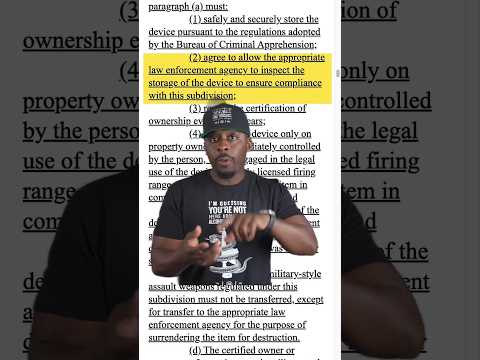
Supreme Court Issues 9-0 Unanimous Decision With Major Nationwide & 2A Implications!!!

Published on January 4, 2025
Duration: 10:14

This video analyzes two Supreme Court cases, Caniglia v. Strong and Tevia v. Suffolk County, impacting firearm rights. Caniglia unanimously ruled against warrantless firearm seizure in homes under the community caretaking exception. Tevia, however, saw the Supreme Court deny review, leaving the special needs exception potentially open for firearm confiscation in certain circumstances, a decision that could embolden states with stricter gun laws.

Quick Summary

The Supreme Court unanimously ruled in Caniglia v. Strong that the community caretaking exception does not permit warrantless firearm seizures in homes. However, the Court denied review in Tevia v. Suffolk County, leaving the special needs exception as a potential, albeit contested, avenue for firearm confiscation in specific circumstances.

Frequently Asked Questions

What did the Supreme Court rule in Caniglia v. Strong regarding firearm searches?

The Supreme Court unanimously ruled in Caniglia v. Strong that the community caretaking exception to the Fourth Amendment warrant requirement does not apply to warrantless searches and seizures of firearms within a home. What is reasonable for vehicles is not automatically reasonable for homes.

Why did the Supreme Court deny review in Tevia v. Suffolk County?

The Supreme Court denied review in Tevia v. Suffolk County, leaving the Second Circuit's ruling intact. This decision did not explicitly endorse the special needs exception for firearm confiscation but left it as a potential argument for states, unlike the clear prohibition in Caniglia.

What is the difference between the community caretaking and special needs exceptions to the warrant requirement?

The community caretaking exception, as clarified by Caniglia v. Strong, generally applies to vehicles and not homes for firearm seizures. The special needs exception applies to searches serving needs distinct from normal law enforcement, such as border security or airport screening, and its application to firearm confiscation remains a point of contention.

What are the potential implications of the Tevia v. Suffolk County decision for gun owners?

The denial of review in Tevia v. Suffolk County means that some states may continue to argue for the legality of warrantless firearm confiscation under the special needs exception, potentially emboldening more aggressive enforcement of gun laws, especially in states with red flag laws.

Related News

All News →

More 2nd Amendment & Law Videos You Might Like

More from Armed Scholar

View all →