Ask Ian: Procurement Then & Now (and Wartime vs Peacetime)

Published on July 7, 2022
Duration: 12:11

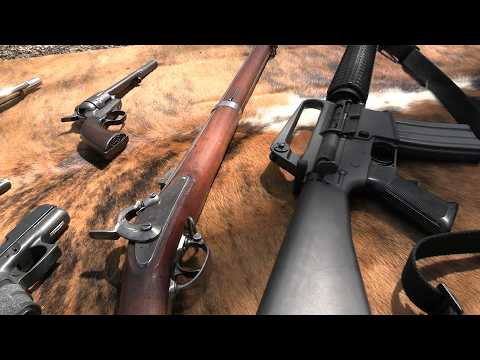
This video delves into the complexities of firearms procurement, contrasting historical methods with modern practices. Expert Ian McCollum explains how wartime needs often led to rushed production of less refined weapons like the Chauchat and Sten, while peacetime development prioritized iterative improvement, exemplified by the FAMAS and L85 programs. The discussion also touches on shifts from national arsenals to private industry and the impact of bureaucracy on modern acquisition.


Quick Summary

Firearms procurement has evolved significantly; historically, governments evaluated numerous individual designs, while modern acquisition relies on established manufacturers. Wartime production prioritized speed (e.g., Chauchat, Sten), accepting flaws, whereas peacetime development focused on iterative refinement (e.g., FAMAS, L85) for long-term utility. Bureaucracy now often complicates modern acquisition more than technical issues did historically.

Chapters

  1. 00:00Introduction and Procurement Question
  2. 00:43Historical Procurement Complexity
  3. 01:31Shift to Private Industry
  4. 03:09Testing Standards: Then vs. Now
  5. 04:12Wartime Procurement Dynamics
  6. 06:08Peacetime Procurement Goals
  7. 08:59Russian Procurement Examples

Frequently Asked Questions

How did historical firearms procurement differ from modern methods?

Historically, procurement involved evaluating many individual inventor submissions, making it complex. Modern procurement relies on established companies like FN or Sig, but can be slowed by bureaucracy and corruption, unlike earlier technical challenges.

What are examples of wartime vs. peacetime firearm development?

Wartime examples include the Chauchat and Sten guns, rushed for immediate needs despite flaws. Peacetime examples are the FAMAS and L85, which underwent long, iterative development processes for perfection and multi-role utility.

Who produced firearms historically versus today?

In the past, national arsenals like Springfield Armory and RSAF Enfield produced winning designs. Today, procurement heavily involves private defense contractors such as Heckler & Koch, FN, and Sig.

What were historical testing standards like for firearms?

Historical testing could be more severe than modern standards, including extreme endurance trials and exposure to corrosive agents like sal ammoniac acid to rigorously test corrosion resistance.

More General Videos You Might Like

More from Forgotten Weapons

View all →