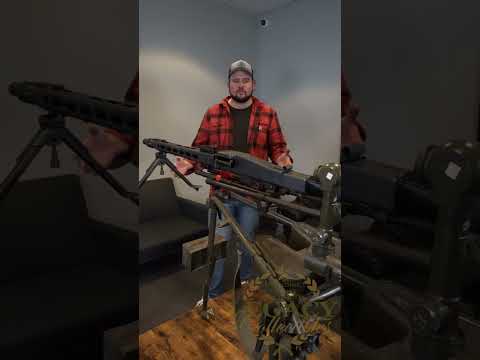
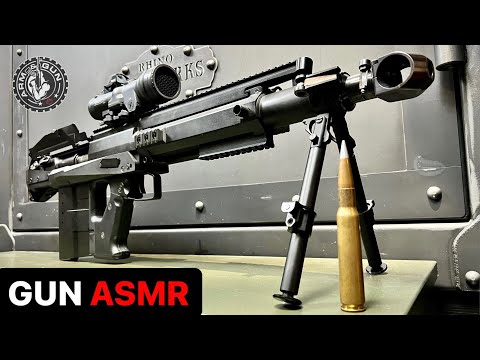
BELTFED Machine Guns | A Brief Overview on Operation, Design & History

Published on January 12, 2021
Duration: 13:02

This video provides a comprehensive overview of belt-fed firearms, explaining their operation, historical development, and military significance. It details the internal mechanics of belt feeding, including the feed pawl system, and discusses the advantages of belt feeds for sustained fire. The presenter highlights key historical belt-fed machine guns like the MG 34, MG 42, M60, and M2 Browning, touching on their design evolution and roles.

Quick Summary

Belt-fed firearms are designed for sustained, high-volume fire, feeding ammunition via linked cartridges to eliminate frequent magazine changes. Their internal mechanisms often utilize a feed pawl system, and they commonly feature quick-change barrels to manage heat from continuous firing.

Chapters

  1. 00:00Introduction to Belt Feds
  2. 01:13What is a Belt Fed Firearm?
  3. 01:53Feed Pawl System Explained
  4. 02:40Importance and Military Use
  5. 03:16Quick Change Barrels
  6. 03:48History of Belt Feds: Hiram Maxim
  7. 05:35Vickers Gun and Water Cooling
  8. 06:01Development of Air Cooled Guns
  9. 06:20Post WWI Machine Gun Development
  10. 06:44Germany's MG 34: The GPMG Concept
  11. 08:01Russia's PKM
  12. 08:50Modern GPMGs: M240
  13. 09:23New Developments in Belt Feds
  14. 09:54Light Machine Guns & S.A.W.s
  15. 10:01Fightlite MCR
  16. 10:32M2 Browning Quick Change Barrel Quirks
  17. 11:45Firearm Rundown: MCR, MG 34, M60, M2
  18. 12:36Conclusion: John Browning's Legacy

Frequently Asked Questions

What is the primary function of a belt-fed firearm?

The primary function of a belt-fed firearm is to provide sustained, high-volume fire by feeding ammunition via linked cartridges, eliminating the need for frequent magazine changes and allowing for continuous engagement.

How does a belt-fed mechanism work internally?

Belt-fed mechanisms typically use a feed pawl system. Spring-loaded arms called feed pawls grab cartridges from the belt, move them into the firearm's action for chambering, and then cycle them through the firing process.

Why are quick-change barrels common on belt-fed guns?

Belt-fed firearms are designed for sustained fire, which can quickly overheat the barrel. Quick-change barrels allow for rapid replacement of a hot barrel with a cool one, preventing the weapon from becoming inoperable due to heat.

Which historical figures are key to the development of belt-fed machine guns?

Hiram Maxim is credited with developing the first true automatic machine gun and the belt-feed system. John Browning is also recognized for his significant contributions to machine gun design, including the M2 Browning.

Related News

All News →

More General Videos You Might Like

More from Arm&Gun

View all →