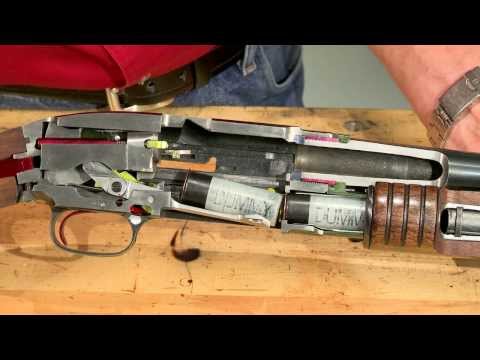
The AR-15 Lock, Stock, and Barrel Presented by Larry Potterfield of MidwayUSA

Published on September 29, 2010
Duration: 1:34

This video contrasts the historical "lock, stock, and barrel" concept with modern firearms, specifically comparing the 1816 Springfield flintlock musket to the M4 service rifle. It highlights significant changes in firearm design and function over two centuries, particularly focusing on the evolution of the lock mechanism, stock design, and rate of fire.

Quick Summary

The historical "lock, stock, and barrel" refers to the ignition mechanism, the firearm's body, and the barrel. The 1816 Springfield had an external flintlock, a long wooden stock, and a 42-inch smoothbore barrel, firing about 3 rounds per minute. The modern M4 rifle features internal lock components, a modular collapsible stock, an 18-inch barrel, and a rate of fire over 700 rounds per minute.

Chapters

  1. 00:01Introduction: Modern vs. Historical Firearms
  2. 00:15Larry Potterfield Introduces "Lock, Stock, and Barrel"
  3. 00:22The Lock Mechanism: 1816 Springfield
  4. 00:28The Stock: 1816 Springfield
  5. 00:32The Barrel: 1816 Springfield
  6. 00:381816 Springfield Rate of Fire
  7. 00:45M4 Style Rifle: Internal Lock Components
  8. 00:51M4 Style Rifle: Stock Design
  9. 01:01M4 Style Rifle: Barrel Specifications
  10. 01:10Rate of Fire Comparison: 1816 Springfield vs. M4
  11. 01:17Conclusion: Evolving Firearm Technology

Frequently Asked Questions

What does "lock, stock, and barrel" refer to in firearms?

The term "lock, stock, and barrel" historically refers to the three main components of a firearm: the lock mechanism (ignition system), the stock (the wooden or synthetic body), and the barrel (the firing tube). These terms represent the fundamental parts of a gun.

How does the lock mechanism differ between an 1816 Springfield and an M4 rifle?

The 1816 Springfield uses an external flintlock mechanism with a visible hammer, while the M4 rifle has its lock components located internally, integrated into a more complex modern action system.

What are the key differences in the stock design between historical and modern rifles?

The 1816 Springfield features a long, fixed wooden stock. In contrast, the M4 rifle has a modular, four-piece stock design that includes a collapsible buttstock, a pistol grip with finger grooves, and a handguard with Picatinny rails for accessories.

What is the significant difference in rate of fire between the 1816 Springfield and the M4?

The 1816 Springfield, a muzzleloader, could achieve about three shots per minute. The modern M4 rifle, however, has a cyclical rate of fire exceeding 700 rounds per minute, showcasing a massive advancement in firearm technology.

Related News

All News →

More General Videos You Might Like

More from MidwayUSA

View all →