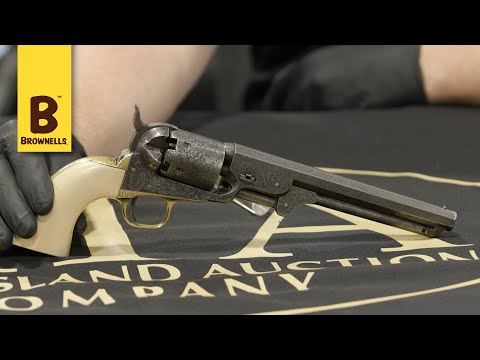
A Texas-Made Civil War Revolver: Tucker Navy Number 1

Published on September 1, 2020
Duration: 9:47

This entry details the Tucker Navy Number 1, a rare Texas-made Confederate copy of the Colt 1851 Navy revolver. Expert analysis highlights its unique features, such as a barrel-mounted rear sight and specific markings, contrasting it with standard Colt patterns. The guide emphasizes its extreme rarity and historical significance within the context of Confederate arms manufacturing during the Civil War.

Quick Summary

The Tucker Navy Number 1 is a rare, Texas-made Confederate copy of the Colt 1851 Navy revolver, distinguished by its unique barrel-mounted rear sight and specific markings. Only three are known to exist, making them highly sought after by collectors.

Chapters

  1. 00:00Introduction: Tucker Navy Revolver
  2. 01:00Manufacturing History: Tucker and Sherrard
  3. 02:00Rarity and Serial Numbers
  4. 03:14Sighting System Analysis
  5. 04:45Technical Identification Marks
  6. 06:04Frame Design and Loading
  7. 08:28Historical Significance

Frequently Asked Questions

What makes the Tucker Navy Revolver unique compared to a Colt 1851 Navy?

The Tucker Navy Revolver, particularly serial number 1, features a distinctive barrel-mounted rear sight, unlike the standard hammer notch sight found on Colt 1851 Navy models. It also has unique markings and often lacks a frame loading notch.

How rare are Tucker Navy revolvers?

Tucker Navy revolvers are extremely rare. Only three are known to exist: serial numbers 1, 59, and 79. This scarcity significantly contributes to their high value and mythical status among collectors.

Who manufactured the Tucker Navy Revolver?

The Tucker Navy Revolver was manufactured by Laban E. Tucker and his sons, operating under the company Tucker and Sherrard, which later evolved into Taylor and Sherrard. They produced these Confederate revolvers under contract for Texas.

What are the key identification features of a Tucker Navy Revolver?

Key features include the serial number stamped on the loading lever, specific punch marks on loading lever screws, six-groove rifling, and often a unique barrel-mounted rear sight. The absence of a frame loading notch is also common.

More Gunsmithing & DIY Videos You Might Like

More from Forgotten Weapons

View all →