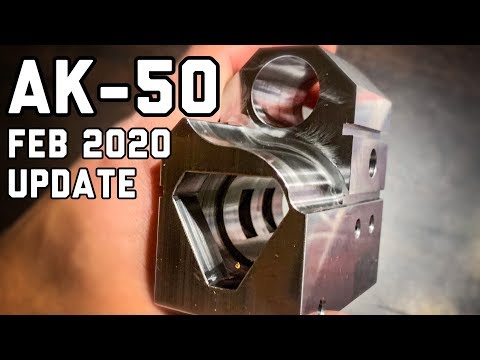
AK-50: April 2020 Update

Published on April 20, 2020
Duration: 15:19

This video provides an in-depth update on the AK-50 project by Brandon Herrera, focusing on design iterations and manufacturing challenges. Herrera, the lead designer, details the shift from a milled receiver to a stamped sheet metal design for improved AKM aesthetics and production efficiency. Key technical discussions include the redesign of the ejector mechanism to a traditional 'shark fin' style and the use of 4140 steel for the trunnion. The update highlights the 'skunkworks' R&D approach, emphasizing creative problem-solving on a budget.


Quick Summary

Brandon Herrera's April 2020 AK-50 update details the project's move to a stamped sheet metal receiver for AKM aesthetics and efficient production. The design reverts to a 'shark fin' ejector to fix brass-rubbing issues, and utilizes 4140 steel for the trunnion. Prototyping involves 3D printing, reflecting a budget-conscious, iterative R&D approach.

Chapters

  1. 00:58Intro & Quarantine Update
  2. 01:46AK-50 Project History
  3. 03:17Design Shift: Milled to Stamped
  4. 04:29Prototype Showcase
  5. 05:26Ejector Redesign
  6. 06:26Shark Fin Mechanism
  7. 08:21V1 vs. V7 Bolts
  8. 12:03R&D Philosophy

Frequently Asked Questions

What is the main design change discussed for the AK-50 in the April 2020 update?

The primary design change is the shift from a milled receiver to a stamped sheet metal receiver. This aims to achieve a more authentic AKM aesthetic and improve production efficiency, moving away from the more complex and costly milled design.

Why is the AK-50 reverting to a 'shark fin' ejector design?

The project is reverting to the traditional AK 'shark fin' ejector from an AR-15 style plunger ejector because the plunger design caused issues with brass being rubbed during ejection, impacting reliability and casing integrity.

What materials are being used in the AK-50 prototypes?

Prototypes feature a 4140 steel front trunnion for durability and strength. Additionally, 3D-printed components, such as the bolt and carrier assembly, are being used for rapid prototyping and iteration.

What is Brandon Herrera's approach to R&D for the AK-50?

Brandon Herrera emphasizes a 'skunkworks' R&D philosophy, focusing on creative problem-solving and iterative design on a budget. This involves leveraging techniques like 3D printing and making design adjustments based on prototype testing.

Related News

All News →

More Gunsmithing & DIY Videos You Might Like

More from Brandon Herrera

View all →