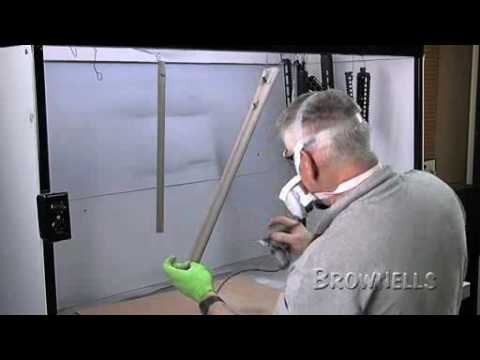
Brownells - Protecting Holes, Gas Ports, and Masking

Published on October 21, 2009
Duration: 2:54

This guide details essential preparation steps for firearms and accessories before applying coatings like Cerakote. It covers protecting critical areas such as pinholes, threads, muzzles, and chambers from abrasive blasting and excessive coating buildup. The instructions also address preventing lubricant seepage during baking and proper masking techniques for optics and accessories to ensure a professional and durable finish.

Quick Summary

To prepare firearms for coating, protect pinholes and threaded holes by inserting pins or screws before abrasive blasting. Use bore plugs and empty cases for muzzles and chambers. Prevent lubricant seepage during baking by preheating parts 25-30 degrees hotter than the curing temperature, followed by a TCE degrease.

Chapters

  1. 00:00Coating Thickness Variables
  2. 00:15Protecting Pinholes and Threaded Holes
  3. 00:31Maintaining Original Pin Appearance
  4. 00:41Protecting Muzzles, Chambers, and Barrels
  5. 00:50Protecting Threads on Muzzles and Comps
  6. 01:00Preventing Lubricant Seepage During Baking
  7. 01:16Preheating to Expel Contaminants
  8. 01:30Final Degreasing and Coating Readiness
  9. 01:43Coating Non-Bakeable Accessories
  10. 01:58Disassembling and Preparing Accessories
  11. 02:12Coating Scopes and Optics
  12. 02:23Matching Camouflage Patterns
  13. 02:30Turret Cap Coating and Release

Frequently Asked Questions

How can I prevent abrasive blasting media from entering firearm pinholes or threaded holes?

Before abrasive blasting, insert a pin or screw into pinholes or threaded holes. This prevents the holes from rounding, stops blasting media from getting inside, and helps ensure a uniform coating appearance on the firearm.

What is the best way to protect the bore of a firearm during coating preparation?

To protect the bore of a firearm's muzzle or chamber during coating preparation, use bore plugs. Additionally, empty cases can be used to prevent blasting agents from affecting the interior of chambers and cylinders.

How do I prevent lubricants from causing finish issues during firearm coating?

Lubricants can seep out during baking and lift the finish. To prevent this, preheat the firearm part 25-30 degrees hotter than the curing temperature for the spray-on finish. After cooling, degrease again with TCE to remove surfaced contaminants.

Can I bake accessories like scopes or bipods when applying firearm coatings?

Typically, baked-on finishes are not suitable for scopes, bipods, or other accessories with temperature-sensitive or injected molded parts (plastic or rubber). Disassemble these items as much as possible and treat each part separately.

More Gunsmithing & DIY Videos You Might Like

More from Brownells, Inc.

View all →