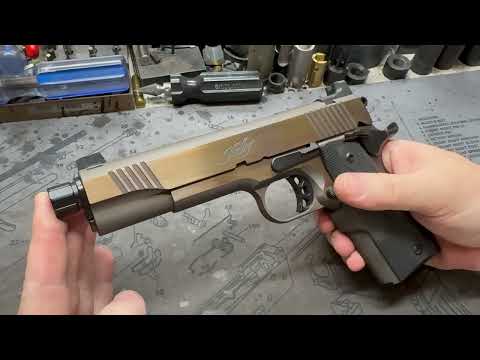
Building the Ultimate 1911 Self-Defense Handgun (1997)

Published on October 7, 2013
Duration: 120:36

This video provides an in-depth guide to customizing a 1911 pistol for self-defense and improved performance, presented by Bill Wilson and Ken Hackathorn. Key modifications discussed include ensuring proper extractor tension, polishing the feed ramp and barrel throat for reliability, upgrading sights, and fine-tuning the trigger pull. The experts also cover the benefits of an extended thumb safety, a beavertail grip safety, and a flat mainspring housing, emphasizing how these changes enhance handling, comfort, and overall shootability.

Quick Summary

Expert gunsmiths Bill Wilson and Ken Hackathorn detail essential modifications for a 1911 self-defense handgun. Key upgrades include ensuring proper extractor tension, polishing the feed ramp and barrel throat, installing high-visibility sights, and tuning the trigger to 4-5 pounds for optimal reliability and handling.

Chapters

  1. 01:041911 History and Design
  2. 04:081911 Advantages for Self-Defense
  3. 08:34Essential 1911 Improvements
  4. 09:01Ammunition and Magazine Reliability
  5. 10:16Trigger Pull and Sight Modifications
  6. 15:18Installing Front Sight
  7. 17:54Trigger Pull Weight for Self-Defense
  8. 21:49Extractor Tension and Reliability
  9. 27:00Barrel Feed Ramp and Throat
  10. 32:16Recoil Spring Selection
  11. 33:20Preferred Trigger Pull Weights
  12. 35:40Hammer Modification for Trigger Job
  13. 38:46Sear Modification for Trigger Job
  14. 41:41Trigger Weight and Material
  15. 44:21Disconnector Modification
  16. 47:26Sear Spring Adjustment
  17. 48:52Mainspring Replacement
  18. 50:10Reassembling the 1911
  19. 52:25Trigger Over-Travel Adjustment
  20. 55:451911 Trigger Advantages
  21. 57:35Extended Thumb Safety Installation
  22. 63:05Beavertail Grip Safety Benefits
  23. 71:36Ambidextrous Safety Considerations
  24. 75:23Trigger Length and Dimensions
  25. 78:40Mainspring Housing: Flat vs. Arched

Frequently Asked Questions

What are the key modifications for a 1911 self-defense handgun?

Key modifications include ensuring proper extractor tension, polishing the feed ramp and barrel throat for reliability, upgrading to high-visibility sights, and fine-tuning the trigger pull to 4-5 pounds. An extended thumb safety and a beavertail grip safety enhance handling and comfort.

What recoil spring weight is recommended for a 1911 used for self-defense?

For full-charge ammunition, an 18-pound recoil spring is recommended for 1911s. This provides a balance between reliable cycling and reducing stress on the firearm compared to lighter factory springs.

Why is a beavertail grip safety important for a 1911?

A beavertail grip safety protects the web of the hand from hammer bite and allows for a higher grip on the pistol. This higher grip can lead to better recoil control and improved accuracy.

What is the ideal trigger pull weight for a 1911 self-defense pistol?

For self-defense applications, a trigger pull weight between 4 and 5 pounds is considered optimal. This provides a crisp break for accuracy while maintaining a safe trigger pull.

Related News

All News →

More Gunsmithing & DIY Videos You Might Like

More from Wilson Combat

View all →