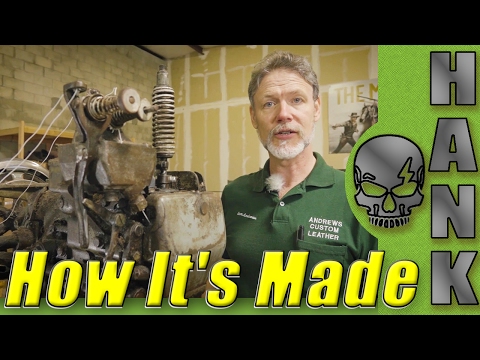
Custom Leather Springbreak Shoulder Holster // How It's Made

Published on June 16, 2020
Duration: 73:49

This video provides an in-depth, step-by-step guide on how to construct a custom leather 'Springbreak' style shoulder holster, a design reminiscent of the classic Dirty Harry movie holster. The process, demonstrated by Sam Andrews of Andrews Custom Leather, covers everything from pattern creation and leather cutting to intricate assembly, including the unique spring mechanism, metal reinforcements, and edge finishing. The guide highlights the specialized techniques and tools required for this complex holster design, suitable for carrying larger handguns.


Quick Summary

A 'Springbreak' holster is a unique shoulder holster design featuring a spring-loaded closure for quick draws, often seen in classic films. Construction requires specific leather weights (around 10 oz for the body, 4-5 oz for channels), custom-made springs from wire, and metal reinforcements to maintain structural integrity.

Chapters

  1. 00:00Introduction and Overview
  2. 01:24What is a Springbreak Holster?
  3. 02:48Holster Making Process Overview
  4. 03:06Pattern and Leather Selection
  5. 05:11Cutting Leather Components
  6. 08:57Cutting Sight Relief and Belt Strap
  7. 10:18Cutting Inner Spring Channels
  8. 12:44Marking Stitching Lines
  9. 14:06Punching Holes for Hardware
  10. 14:37Setting Hardware (Snaps, T-Nuts)
  11. 16:18Finishing Edges of Inner Components
  12. 17:12Slicking Edges (Machine and Hand)
  13. 19:15Positioning Inner Channels and Anchor
  14. 20:57Applying Glue for Spring Channels
  15. 22:37Attaching Spring Channel Pieces
  16. 23:07Skiving Belt Loop Foot
  17. 23:49Creating Cylinder Pockets
  18. 25:53Adding Metal Reinforcement
  19. 30:23Cutting Lining Material
  20. 32:32Fairing Edges Before Lining
  21. 33:03Applying Contact Cement
  22. 35:17Attaching Lining and Trimming
  23. 37:26Truing Edges with Belt Sander
  24. 38:06Creating Stitching Grooves
  25. 44:03Sewing the Holster
  26. 45:42Beveling Stitched Edges
  27. 48:22Slicking Edges (Final Polish)
  28. 51:23Opening Spring Channels in Lining
  29. 52:03Molding Spring Channels Open
  30. 53:10Shaping the Holster Body
  31. 54:47Making the Spring
  32. 59:17Inserting the Spring
  33. 62:13Securing the Spring with a Welt
  34. 65:00Stitching the Welt Shut
  35. 66:16Finishing Welt Edges
  36. 67:00Final Assembly and Shaping
  37. 68:47Drying and Finishing (Color/Edge Coat)
  38. 69:33Customization Options (Carving, Rigging)
  39. 71:03Typical Firearms for This Holster
  40. 71:29Pricing and Ordering Information
  41. 72:40Conclusion and Contact Info

Frequently Asked Questions

What makes a 'Springbreak' holster unique compared to other shoulder holsters?

A 'Springbreak' holster is distinguished by its spring-loaded closure mechanism, which securely holds the firearm and allows for a rapid draw without requiring an exaggerated arm movement. This design is often associated with classic movie holsters.

What type of leather is recommended for constructing a Springbreak shoulder holster?

For the main body of a Springbreak holster, approximately 10-ounce leather is recommended for its rigidity. The inner channel pieces that hold the spring are typically made from lighter 4-5 ounce leather for flexibility.

Can the spring for a Springbreak holster be purchased separately?

No, the spring for a Springbreak holster is not a standard commercially available part. It must be custom-made from spring wire, bent and shaped specifically for the holster's design and tension requirements.

Why are metal reinforcements necessary in a Springbreak shoulder holster?

Metal reinforcements, often made from materials like galvanized roof flashing, are essential to prevent the leather spring channels from collapsing. This ensures the holster maintains its shape and function, especially around the internal spring mechanism.

Related News

All News →

More Gunsmithing & DIY Videos You Might Like

More from Hank Strange

View all →