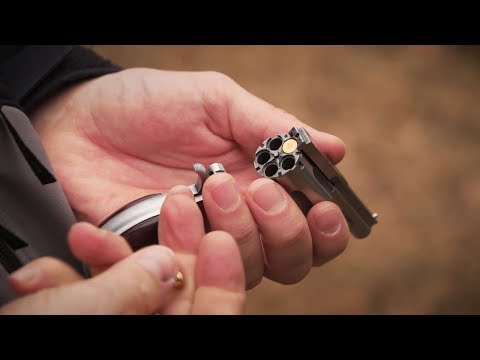
Forging Guns at Smith & Wesson: GunVenture|S1 E5 P1

Published on January 22, 2017
Duration: 5:18

This expert-level entry details the intricate firearm manufacturing processes at Smith & Wesson, as explained by Paul Pluff. It covers the critical role of forging in creating stronger firearm components, the advanced use of CNC machining for precision, and the company's commitment to in-house manufacturing for quality control. The insights highlight the evolution of manufacturing technology and the rigorous standards employed.

Quick Summary

Smith & Wesson enhances firearm strength through forging, a process that creates a more compact and dense material. They combine this ancient technology with modern CNC machining and maintain strict in-house quality control for all components, ensuring high-capacity production and durability.

Chapters

  1. 00:25Introduction to Gun Manufacturing: Forging & Casting
  2. 00:44Modern Gun Manufacturing: CNC & Quality Control
  3. 01:18Smith & Wesson Forge: Strength Through Forging
  4. 01:33Forge Facts: Equipment & Process Details
  5. 02:45Forging a Revolver Frame
  6. 03:07Smith & Wesson Machining Floor Tour
  7. 03:23Self-Reliance in Firearm Component Manufacturing
  8. 04:15Evolution of Manufacturing Technology at S&W
  9. 05:04Quality Control and Assembly Processes

Frequently Asked Questions

How does forging improve firearm strength?

Forging creates a more compact and dense material structure within firearm components. This process aligns the metal's grain structure, significantly enhancing its tensile strength and resistance to stress, making the final firearm more robust and durable.

What technology does Smith & Wesson use in manufacturing?

Smith & Wesson utilizes a combination of advanced technologies, including high-tonnage forging presses, sophisticated CNC machining centers for precision, and high-tech measurement tools like Renishaw probes. They also maintain older screw machines for specific component needs.

Why is in-house manufacturing important for Smith & Wesson?

Manufacturing most components in-house allows Smith & Wesson to maintain complete control over capacity and quality. This self-reliance ensures that every part, from tiny springs to critical frame components, meets their rigorous standards.

What are the key stages in manufacturing a firearm at Smith & Wesson?

The process begins with forging or casting raw materials, followed by extensive CNC machining for precise shaping. Components then undergo rigorous quality control checks, and finally, assembly and testing are performed to ensure a reliable and high-quality firearm.

Related News

All News →

More Gunsmithing & DIY Videos You Might Like

More from Gun Talk Media

View all →