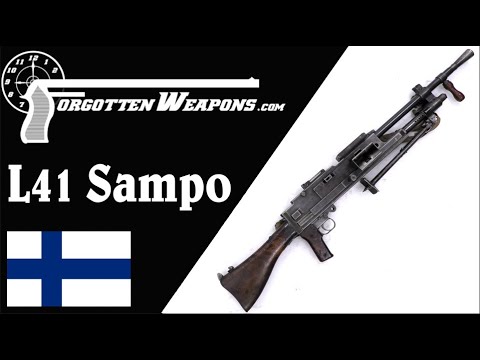
L-34 Sampo: Aimo Lahti's Rejected Masterpiece

Published on June 30, 2021
Duration: 17:06

This guide details the field stripping procedure for the L-34 Sampo, a rare Finnish light machine gun designed by Aimo Lahti. The process involves removing the buttstock, recoil spring, and the gas piston/bolt carrier group. The video highlights the relative simplicity of the L-34's design compared to its predecessor, the LS-26, with a significantly lower parts count.

Quick Summary

The L-34 Sampo is a Finnish light machine gun designed by Aimo Lahti, featuring a gas-operated, long-stroke piston system and select-fire capability. With only 58 parts and a weight of 8 kg, it was simpler and lighter than its predecessor, the LS-26. Despite its merits, it was never adopted due to evolving military needs for belt-fed weapons and market competition.

Chapters

  1. 00:00Introduction to the L-34 Sampo
  2. 01:41Design Influences
  3. 03:21Markings and Mythology
  4. 04:53Caliber and Selector
  5. 07:13Barrel and Gas System
  6. 08:03Field Stripping
  7. 11:41Technical Comparison
  8. 13:51Historical Context and Rejection

Frequently Asked Questions

What is the L-34 Sampo?

The L-34 Sampo is a rare Finnish light machine gun designed by Aimo Lahti in the 1930s. It was developed as a gas-operated alternative to the complex LS-26 and featured a simpler design with fewer parts and a lower weight.

What are the key technical specifications of the L-34 Sampo?

The L-34 Sampo is gas-operated with a long-stroke piston, fires from an open bolt in select-fire mode, and has 58 parts. It weighs 8 kg (17.6 lbs) and was chambered in 7.92x57mm Mauser for export, with intentions for 7.62x54R use.

Why was the L-34 Sampo never adopted by the military?

Despite performing well in trials, the L-34 Sampo was not adopted because military requirements shifted towards belt-fed machine guns. The market was also already established with competitors like the Bren and ZB-26.

What influences shaped the design of the L-34 Sampo?

The design of the L-34 Sampo was influenced by the success of the BAR in Sweden and the ZB-26/Bren light machine guns. It also incorporated a top-mounted box magazine for easier prone shooting and magazine changes.

Related News

All News →

More Gunsmithing & DIY Videos You Might Like

More from Forgotten Weapons

View all →