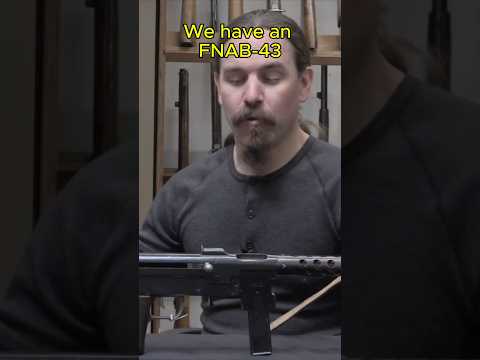
MGD PM9 Rotary-Action Submachine Gun

Published on May 23, 2017
Duration: 12:15

This guide details the disassembly of the MGD PM9 submachine gun, highlighting its unique rotary recoil system and internal mechanisms. It covers field stripping, identifying key components like the rotary lug and sear engagement, and the integrated cleaning rod. The information is presented with the analytical depth expected from an expert like Ian McCollum.

Quick Summary

The MGD PM9 submachine gun features a unique rotary action powered by a clock-spring mainspring, enabling a compact design and reduced rate of fire. It folds for concealed carry, is adapted to use MP40 magazines in its 9mm Parabellum variant, and has a distinctive disassembly process involving its rotary lug and recoil mechanism.

Chapters

  1. 00:00Introduction to the MGD PM9
  2. 00:30History and Naming
  3. 01:20Folding Mechanism
  4. 01:45Caliber and Magazines
  5. 03:22Controls and Operation
  6. 04:50Rotary Recoil System
  7. 07:13Disassembly and Internals
  8. 10:57Integrated Cleaning Rod

Frequently Asked Questions

What is the unique feature of the MGD PM9's action?

The MGD PM9 features a unique rotary action powered by a clock-spring type mainspring. This system acts as the bolt's over-travel, allowing for a shorter receiver and reduced rate of fire without a heavy buffer spring.

How does the MGD PM9 facilitate concealed carry?

The MGD PM9 is designed with a highly effective folding mechanism, allowing it to collapse into a very compact package. This makes it significantly easier to conceal compared to many other firearms, even smaller than the Hotchkiss Universal.

What caliber and magazine does the MGD PM9 use?

Originally designed for 7.65mm French Long, the MGD PM9 was updated to 9mm Parabellum. For this caliber, it utilizes readily available MP40 magazines, simplifying logistics and parts availability.

Can you explain the disassembly process for the MGD PM9?

Disassembly involves removing the rotary mainspring assembly. Key internal components to note are the rotary lug that cycles the bolt and the sear's engagement with the recoil mechanism rather than the bolt itself. An integrated cleaning rod is also found in the stock.

Related News

All News →

More Gunsmithing & DIY Videos You Might Like

More from Forgotten Weapons

View all →