Sig P320: Anvil 0151

Published on September 6, 2025
Duration: 15:37

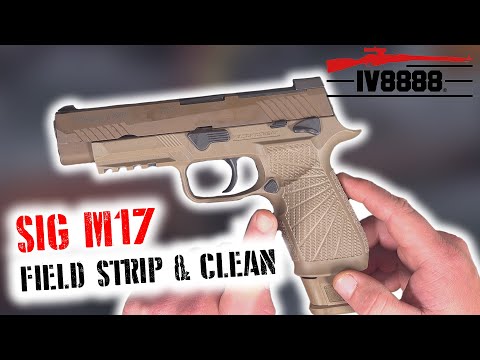
This video details the disassembly of a Sig P320's fire control group, highlighting its modularity. The presenter, new to this specific platform, demonstrates how to remove the fire control cassette and barrel, emphasizing the importance of understanding the internal mechanisms. The content underscores that firearm malfunctions are typically due to human error or maintenance issues rather than inherent equipment flaws.

Quick Summary

The Sig P320 features a modular design where the fire control group can be removed as a unit from the polymer grip. It functions as a single-action, automatic reset firearm, with a trigger interlock safety preventing striker movement unless the trigger is pulled. Most firearm issues stem from human error, not equipment failure.

Chapters

  1. 00:08Introduction to Polymer Striker-Fired Handguns
  2. 00:17Disassembling the P320
  3. 00:27250,000 Round Example
  4. 01:02First Time Disassembly Experience
  5. 01:15Modular Design Concept
  6. 01:44Take Down Lever and Initial Removal
  7. 01:58Filthy Condition of the Gun
  8. 02:20History of the P320 Example
  9. 03:22Explaining Internal Components
  10. 04:01Using Compressed Air Safely
  11. 04:11Trigger Bar and Sear Interaction
  12. 05:03Removing the Fire Control Cassette
  13. 05:29Barrel Removal
  14. 06:07Cleaning Up the Components
  15. 06:12Safety Interlock in Fire Control Group
  16. 06:43Striker Travel and Lock Time
  17. 07:01Modularity of the Unit
  18. 07:09Interlock Mechanism Explained
  19. 08:04Trigger Interlock Importance
  20. 08:40Component Interaction for Firing
  21. 09:00Sear Pivot and Interaction Points
  22. 09:27Single-Action vs. Double-Action
  23. 10:01Trigger Bar Motion Underneath
  24. 10:21Human Factor in Malfunctions
  25. 11:08Comparison to Bolt-Action Rifles
  26. 11:11Bolt Action Cocking Piece and Trigger
  27. 12:07P320 Slide Cycling and Sear Engagement
  28. 12:28Working Principles of P320 and Bolt-Action
  29. 13:03Historical Safety Systems
  30. 13:16People Injure People, Not Machines
  31. 13:34Reassembly Process
  32. 13:40Historical NDs and Training Problems
  33. 14:18Training Problem vs. Equipment Problem
  34. 14:35Fire Control Group Functionality Confirmed
  35. 14:49Operating the Firearm Correctly
  36. 14:57Final Advice: Train, Learn, Use Proper Ammo

Frequently Asked Questions

How is the Sig P320 designed for modularity?

The Sig P320 is highly modular due to its design where the fire control group, containing the trigger and striker mechanism, can be easily removed as a single unit from the polymer grip module. This allows for quick changes of grip frames and other serialized components.

What is the primary function of the trigger interlock in the Sig P320?

The trigger interlock in the Sig P320's fire control group acts as a safety mechanism. It ensures that the striker can only move forward to fire a round when the trigger is intentionally pulled, preventing accidental discharge if the trigger is not depressed.

Is the Sig P320 a double-action or single-action firearm?

The Sig P320 is considered a single-action, automatic reset firearm. Unlike some double-action pistols, its striker is fully cocked by the slide's action. Pulling the trigger then simply releases the striker, rather than performing a secondary cocking and firing action.

What is the main cause of firearm malfunctions according to the video?

The video strongly emphasizes that the vast majority of firearm malfunctions and accidents are attributed to human error, often referred to as the 'human in the loop.' This includes improper operation, lack of maintenance, or incorrect ammunition selection, rather than inherent flaws in the firearm's design.

Related News

All News →

More Gunsmithing & DIY Videos You Might Like

More from Mark Novak

View all →