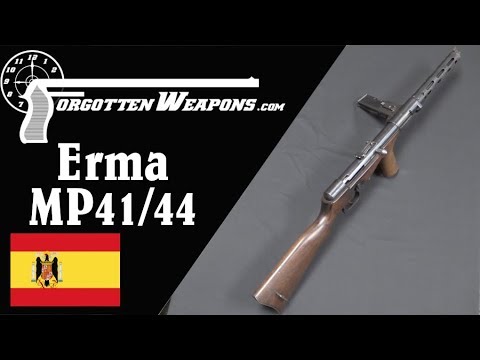
The Added Safety on German Inter-War SMGs

Published on November 10, 2022
Duration: 6:30

This guide details the installation of a bolt-lock safety, a common police retrofit on German inter-war submachine guns like the Erma EMP. The process involves a three-screw housing and requires precise slotting in both the receiver and the bolt to allow a lever to lock the bolt in the forward, safe position. This modification enhanced safety for police carrying loaded weapons.

Quick Summary

German inter-war police submachine guns, such as the Erma EMP, often featured a bolt-lock safety retrofit. This mechanism, installed by cutting slots in the receiver and bolt, allowed the bolt to be locked in the forward, safe position, enhancing carrying safety and protecting the action from debris.

Chapters

  1. 00:00Introduction to Erma EMP Safety
  2. 01:25Standard Open-Bolt Safety Issues
  3. 02:30Need for Police-Specific Safeties
  4. 03:20Bolt-Lock Safety Demonstration
  5. 04:04Installation and Disassembly Details
  6. 05:23Historical Context and Prevalence

Frequently Asked Questions

What was the purpose of the added safety on German inter-war police SMGs?

The added safety, often a bolt-lock lever, allowed officers to safely carry their submachine guns with a loaded magazine and the bolt held in the forward, closed position, preventing accidental discharge and keeping the action clear of debris.

How was the bolt-lock safety installed on firearms like the Erma EMP?

Installation required cutting a vertical slot into the receiver tube and a corresponding slot into the bolt. A three-screw external housing held a rotating lever that engaged the bolt slot to lock it when set to 'Safe'.

Which German SMGs commonly featured these police safety retrofits?

This type of safety is frequently found on German police submachine guns from the inter-war period, including the MP18.1, MP34, MP35, and even some MP40 models, indicating their intended service use.

What was the standard safety mechanism on most 1930s German SMGs?

Most 1930s German SMGs fired from an open bolt and used a notch in the receiver to hold the bolt handle back. While functional for clearing, this left the action open and vulnerable to dirt and debris.

More Gunsmithing & DIY Videos You Might Like

More from Forgotten Weapons

View all →