Belgian GP35: The First Military Browning High Power

Published on July 29, 2019
Duration: 11:42

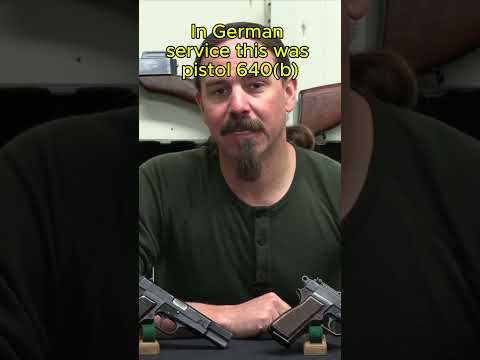
This review delves into the Belgian GP35 'High Power,' John Browning's final design, completed by Dieudonné Saive. It highlights the evolution from early trials pistols with unique oval ejection ports and tangent sights to later production models. The video also covers the pistol's production under German occupation during WWII and its distinctive features like the shoulder stock slot and early magazine design.

Quick Summary

The Belgian GP35 High Power, John Browning's final design, evolved from early trials models with oval ejection ports and 500m tangent sights to later production versions. During WWII, the FN factory produced them under German occupation, identifiable by Waffenamt codes and simplified designs.

Chapters

  1. 00:00Introduction: Belgian GP35 High Power
  2. 00:42Adoption and Early Production History
  3. 01:50WWII German Occupation and FN Production
  4. 02:46Trials Pistol: Oval Ejection Port
  5. 03:23Sights: 500m Tangent Rear Sight
  6. 04:06Shoulder Stocks and Holsters
  7. 05:10Stock Slot and Magazine Details
  8. 07:10Belgian Proof Marks and Markings
  9. 09:00German Occupation Markings: Waffenamt Codes

Frequently Asked Questions

What makes the early Belgian GP35 High Power pistols unique?

Early Belgian GP35 trials pistols, produced before full mass production, are distinguished by their unique oval-shaped ejection ports and tangent rear sights graduated to 500 meters. They also featured a specific machining for a shoulder stock slot and early magazine designs.

How did German occupation affect the production of the Browning High Power?

During WWII, German forces occupied the FN factory and continued producing the High Power for their military. These occupation-era pistols often bear German Waffenamt codes (like WaA613) and may have a simplified design, lacking the stock slot and tangent sights found on earlier models.

What were the sight options for the Belgian GP35 High Power?

The Belgian Army's GP35 pistols were typically equipped with tangent rear sights marked up to 500 meters. For commercial sales, FN also offered a version with sights graduated to 1,000 meters, indicating the pistol's potential for precision shooting.

Can you identify a GP35 produced under German occupation?

Yes, GP35s made during German occupation will lack Belgian proof marks and instead feature German Waffenamt acceptance stamps, such as WaA613. The design might also be simplified, omitting features like the shoulder stock slot.

More Reviews Videos You Might Like

More from Forgotten Weapons

View all →