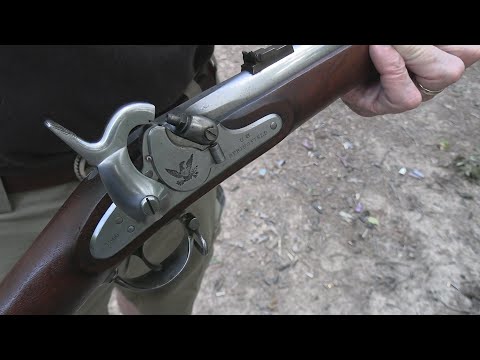
Confederate Spiller & Burr Revolver (Presentation!)

Published on March 7, 2016
Duration: 14:13

This review details the Spiller & Burr, the third most common Confederate martial revolver, highlighting its troubled production history marked by material shortages and mechanical flaws. Despite initial contract issues and a shift from Colt to Whitney designs, later models incorporated improvements like standardized .36 caliber, Colt-style latches, and safety slots. The analysis includes a close examination of a well-preserved specimen and its unique markings and sights.

Quick Summary

The Spiller & Burr was the third most common Confederate martial revolver, but faced significant production challenges including mechanical flaws and material shortages. Later models improved by standardizing the .36 caliber, adding a Colt-style loading lever latch, and incorporating safety slots.

Chapters

  1. 00:00Introduction to the Spiller & Burr Revolver
  2. 00:53Founders and Origins of Spiller & Burr
  3. 01:37Lt. Col. James Burton's Role
  4. 02:56Design Shift: Colt to Whitney
  5. 04:25Production Failures and Rejections
  6. 05:34Material Shortages and Cylinder Failures
  7. 06:34Government Buyout and Limited Production
  8. 08:50Specimen Analysis: Dr. Thomas Hill's Revolver
  9. 10:21Technical Improvements in Later Models
  10. 11:27Markings and Sights Examination
  11. 12:44Barrel Lengths and Gain Twist Rifling

Frequently Asked Questions

What was the Spiller & Burr revolver's significance during the Civil War?

The Spiller & Burr was the third most common Confederate martial revolver. Despite significant production issues, it represented a crucial effort by the Confederacy to arm its forces with domestically produced firearms during the Civil War.

What were the main production challenges for the Spiller & Burr revolver?

Production was plagued by slow output, mechanical flaws, caliber inconsistencies, and severe material shortages. The Confederacy's lack of steel forced the use of twisted iron for cylinders, leading to frequent failures.

Did the Spiller & Burr revolver follow the Colt design?

Initially, the contract specified Colt-pattern revolvers. However, the company switched to a Whitney design after acquiring a factory already tooled for its production, leading to a hybrid approach in some aspects.

What technical improvements were made to later Spiller & Burr revolvers?

Later models standardized the .36 caliber, adopted a Colt-style loading lever latch for easier reloading, and incorporated safety slots between percussion nipples, allowing all six chambers to be carried safely.

Related News

All News →

More Reviews Videos You Might Like

More from Forgotten Weapons

View all →