Martini Henry vs Springfield Trapdoor

Published on December 10, 2019
Duration: 22:00

This guide details the mechanical operation of the Martini Henry and Springfield Trapdoor rifles, as demonstrated by hickok45. It highlights the distinct breech-loading mechanisms of these iconic 19th-century firearms. The video emphasizes the historical significance and evolution of rifle technology from muzzleloaders to early breech-loaders.


Quick Summary

The Martini Henry and Springfield Trapdoor rifles represent a pivotal shift from muzzleloaders to breech-loading metallic cartridge firearms. The Martini Henry uses a lever-actuated falling block action with the large .577/450 cartridge, while the Springfield Trapdoor features a hinged breech block and the more accessible .45-70 Government cartridge. Ammunition cost and availability favor the .45-70 for modern enthusiasts.

Chapters

  1. 00:00Introduction to Historical Rifles
  2. 01:45Breech-Loading Evolution
  3. 03:50Cartridge Comparison
  4. 05:50Shooting the Martini Henry
  5. 08:10Shooting the Springfield Trapdoor
  6. 11:40Ammunition Costs and Availability
  7. 13:40Historical Context and Final Thoughts

Frequently Asked Questions

What are the main differences between the Martini Henry and Springfield Trapdoor rifles?

The Martini Henry features a lever-actuated falling block action and fires the large .577/450 Martini-Henry cartridge. The Springfield Trapdoor uses a hinged breech block (trapdoor) mechanism and fires the .45-70 Government cartridge. Both are single-shot black powder metallic cartridge rifles from the late 19th century.

Why is .45-70 Government considered more practical than .577/450 Martini-Henry ammunition?

The .577/450 Martini-Henry cartridge is significantly more expensive and harder to find, with original-style rounds costing up to $200 for a box of 20. The .45-70 Government is widely available and more affordable, making it a practical choice for modern shooters.

What historical context do the Martini Henry and Springfield Trapdoor represent?

These rifles represent a crucial transition period in military firearms, moving from muzzle-loading muskets to more efficient breech-loading metallic cartridge rifles in the late 1860s and 1870s, before the advent of repeating rifles.

What are the mechanical actions of the Martini Henry and Springfield Trapdoor?

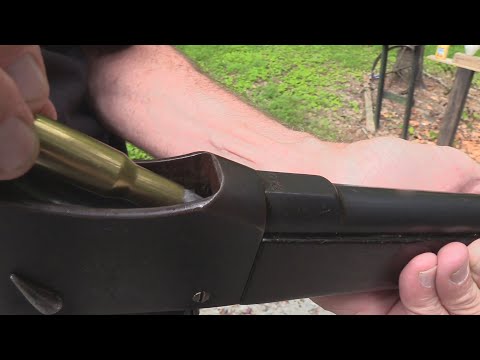
The Martini Henry employs a lever-actuated falling block action, where a lever drops a block to open the breech. The Springfield Trapdoor utilizes a hinged breech block, often referred to as a 'trapdoor,' which pivots open for loading.

More Reviews Videos You Might Like

More from hickok45

View all →