This video explores the performance of .30-06 ammunition, specifically focusing on the .30-06 Accelerator sabot round and comparing it to standard Full Metal Jacket (FMJ) and Hornady CX hunting rounds. The presenter conducts ballistics gel tests to demonstrate penetration differences, aiming to explain discrepancies in the Charlie Kirk case. The .30-06 Accelerator shows significantly less penetration, consistent with its design as a small .22 caliber bullet fired at high velocity, often resulting in fragmentation and no exit wound. Standard FMJ rounds exhibit much deeper penetration, while the expanding Hornady CX offers a balance.
This review of the Ruger New Model Single-Six Convertible covers its performance with both .22LR and .22WMR cylinders. The 9.5-inch barrel is noted for potentially increasing velocity, especially with .22 Magnum. Testing at various distances highlights the firearm's accuracy potential, though the wide front sight blade presents challenges for precision shooting at longer ranges. The reviewer suggests sight adjustment is necessary for optimal performance beyond close distances.
This video compares Fiocchi Range Dynamics and CCI Standard Velocity .22LR ammunition at 100 yards using a CZ 457 rifle. While both ammunitions are 40-grain lead round nose, the Fiocchi exhibited significant inconsistency and flyers, resulting in a larger average group size (2.23 inches) and mean radius (.73 MOA). CCI Standard Velocity, despite also having flyers, demonstrated better overall consistency with a slightly smaller average group size (2.21 inches) and a tighter mean radius (.66 MOA), making it the preferred choice for accuracy in this specific rifle setup.
This video provides a detailed comparison of five different brands of 55-grain M193 ammunition, evaluating their performance through two distinct AR-15 barrels. The analysis includes muzzle velocity, 30-shot group sizes, and AZ scores at 100 yards, offering valuable data for shooters seeking to understand brand-specific performance characteristics.
This review of the Smith & Wesson FPC in 5.7x28mm highlights its innovative folding design and affordability, positioning it as a potential survival carbine or PDW. While praising its shootability, accuracy, and low recoil, the review identifies significant reliability issues, particularly with first-round feeding, across multiple magazines and ammunition types. The reviewer suggests the 9mm variant may be a more reliable choice for self-defense.
This video details an accuracy test of a neglected, 80-year-old Mossberg 44 US-D rifle after restoration. The reviewer, operating from a rifle range with a stable setup, tested various .22 LR ammunition types at 25 yards. Despite some functional quirks due to its age and restoration status, the rifle demonstrated surprising accuracy, achieving 1/4-inch groups with specific ammunition, highlighting the enduring quality of older firearms.
This video features a firearms enthusiast discussing various handgun calibers, primarily comparing the 10mm Auto and .357 Magnum. The speaker emphasizes the superior power and ballistic performance of the .357 Magnum, citing velocity and penetration data. The discussion also touches on magazine loaders, shotgun preferences, and general firearm ownership topics, reflecting a knowledgeable perspective on practical ballistics and firearm utility.
This video argues that the .45 ACP remains superior to the 9mm in terms of stopping power and impact, despite the 9mm's popularity. It details the historical development of both calibers, compares their ballistic performance, and discusses practical applications in self-defense and home defense scenarios. The .45 ACP is highlighted for its larger diameter, slower velocity, and resulting wider wound channels, especially when expansion fails.
The video argues that .38 Super offers no practical advantage over 9mm Luger, citing its higher cost and limited availability. The speaker also clarifies a previous video about .38 Special revolvers, emphasizing that the recommendation was a direct answer to a specific viewer question about overlooked budget options, not a personal endorsement of those particular models over others like the LCR.
This video evaluates the accuracy of a Fierce Mini Rogue 2.0 rifle chambered in 7mm-08 Remington, specifically testing the impact of a suppressor on its performance. The presenter uses two types of Norma ammunition, Tip Strike and Whitetail, noting inconsistent accuracy across different loads and expressing disappointment with the rifle's overall performance despite significant accessory additions like a high-end scope and recoil pad. The presenter suggests the rifle may be ammo-picky and invites viewer feedback on their experiences.
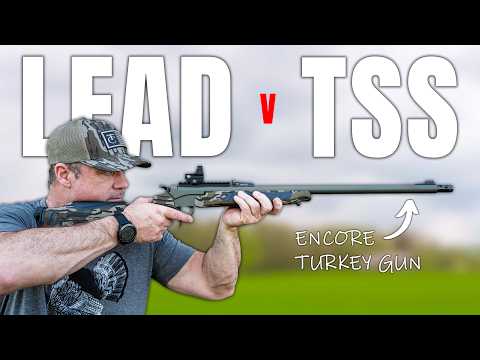
This guide details a method for patterning and zeroing turkey hunting ammunition, specifically comparing Federal Premium TSS and Remington Nitro Turkey loads. It emphasizes the importance of adjusting optics for different loads and ranges, drawing on expert instruction to optimize shot placement for ethical turkey hunting. The process involves testing at 25 and 50 yards to evaluate pattern density and effectiveness.
This video demonstrates the audible difference between supersonic and subsonic 5.7x28mm ammunition when fired from a suppressed firearm outdoors. The speaker highlights the muffled sound of suppressed fire, implying the use of subsonic rounds for maximum noise reduction. Visuals clearly label the two types of ammunition for comparison.
Gun Laws by State
Read firearms regulations for all 50 states + D.C.
Find Gun Dealers
Search licensed FFL dealers near you.