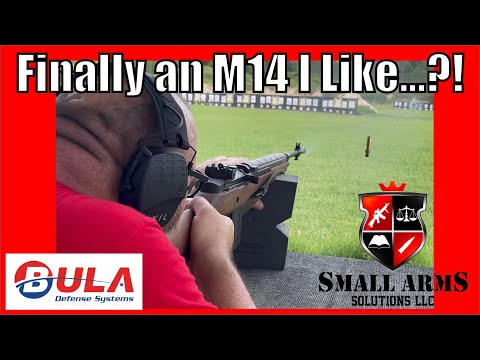
NOTHING MAKES SENSE ๐Ÿ˜ญ: Springfield Armory M1As [Review]

Published on October 15, 2019
Duration: 15:49

The Springfield Armory M1A, a civilian variant of the M14, is reviewed as a sentimental purchase rather than a performance-driven rifle. While the National Match and SOCOM 16 models offer distinct features, both exhibit sensitivity to ammunition and mounting solutions, leading to inconsistent accuracy. The rifle's dated ergonomics and historical context are highlighted, suggesting it appeals more to enthusiasts of American firearms history than modern tactical users.

Quick Summary

The Springfield Armory M1A, a civilian M14 variant, is reviewed as a sentimental purchase. While the National Match and SOCOM 16 models have distinct features, both require specific ammo and mounting for accuracy, exhibiting dated ergonomics and inconsistent performance compared to modern rifles.

Chapters

  1. 00:00Introduction: M1A Legacy & Viability
  2. 01:05Historical Context: NATO Cartridge Debate & M14
  3. 01:57Vietnam War Performance Issues
  4. 03:05M1A National Match vs. SOCOM 16 Features
  5. 03:43Ergonomics & Design Criticisms
  6. 06:41Initial Accuracy Testing Frustrations
  7. 10:01Manufacturer Consultation & Factory Testing
  8. 11:15Final Range Results with Optics
  9. 13:01Conclusion: Sentimental vs. Performance Purchase

Frequently Asked Questions

What are the key differences between the Springfield M1A National Match and SOCOM 16 models?

The National Match is hand-built for competition with a glass-bedded walnut stock and a 5lb two-stage trigger. The SOCOM 16 is a more compact variant featuring a 16-inch barrel, polymer stock, muzzle brake, and a scout-style Picatinny rail for optics.

What accuracy can be expected from a Springfield M1A?

While the M1A can achieve respectable accuracy, it is highly sensitive to ammunition type and optic mounting solutions. Factory testing showed the National Match at 1.25 MOA and the SOCOM 16 at 2 MOA at 100 yards with specific loads and optics.

Are there any ergonomic issues with the Springfield M1A?

Yes, the M1A has dated ergonomics. It's heavy (8-10 lbs), the operating rod placement can 'bite' the support hand, and the safety is located inside the trigger guard, requiring fingers near the trigger to operate.

Is the Springfield M1A a good choice for modern combat or competition?

The M1A is generally not recommended for modern performance-driven roles. It lacks the consistency of AR-10 platforms and has dated ergonomics, making it more of a sentimental or historical purchase for enthusiasts.

Related News

All News โ†’

More Reviews Videos You Might Like

More from Pew Pew Tactical

View all โ†’