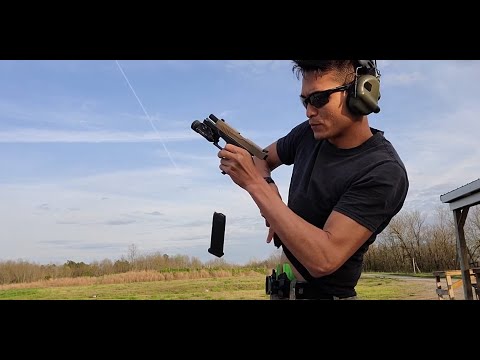
PSA Dagger, Issues After 1700 Rounds.

Published on February 4, 2022
Duration: 26:26

This review of the Palmetto State Armory Dagger, conducted after approximately 1700 rounds, highlights its similarities to a Glock Gen 3 clone and its competitive price point. While offering good ergonomics and a decent trigger after break-in, the Dagger exhibits higher bore axis, non-Glock holster compatibility, and a notable increase in malfunctions compared to a Glock 19, particularly with steel-cased ammunition and in colder conditions. The reviewer concludes it's best suited for recreational shooting rather than serious duty use.

Quick Summary

The Palmetto State Armory Dagger, a Glock Gen 3 clone, offers a budget-friendly option with good ergonomics and a trigger that improves after break-in. However, after 1700 rounds, it exhibited increased malfunctions, especially with steel ammo, and lacks Glock holster compatibility, making it more suitable for recreational use than serious duty.

Chapters

  1. 00:00Introduction and Overview
  2. 01:47PSA Dagger Initial Impressions
  3. 02:25Round Count and Data Points
  4. 04:02Glock vs. PSA Dagger Case Study
  5. 04:24PSA Dagger as Glock Gen 3 Clone
  6. 05:01Factory Configuration and Included Items
  7. 05:21Rail and Takedown Mechanism
  8. 06:23Trigger Performance and Break-in
  9. 07:50Grip Texture and Ergonomics
  10. 08:44Finger Cutouts and Glock Knuckle
  11. 09:46Bore Axis and Handling
  12. 10:25Magazine Well Cutouts
  13. 10:51Internal Differences: Guide Rod
  14. 11:14Slide Serrations
  15. 11:36Disassembly Quirks
  16. 11:59Roll Pin Issues
  17. 12:32Shootability and Recoil Impulse
  18. 12:52Accuracy Comparison
  19. 13:36Dimensional Differences and Holster Compatibility
  20. 14:28Dovetail Tightness and Sight Installation
  21. 15:07Reliability Testing: Hollow Points
  22. 15:52Malfunctions and Ammunition Types
  23. 16:38Brass vs. Steel Ammo Malfunctions
  24. 17:04Magazine-Related Malfunctions
  25. 17:31Comparison with Glock 19 Reliability
  26. 18:42Total Cost of Ownership
  27. 19:50Is the PSA Dagger Worth It? Opinion
  28. 20:50Conclusion: Serious Shooter vs. Fun Gun
  29. 21:33Handgun as a Tool
  30. 22:22Downsides vs. Price
  31. 23:10Not Recommended for Duty/CCW
  32. 23:52Value Proposition for Recreational Shooting
  33. 24:16Gen 2 Expectations
  34. 24:32Affordability and First Purchase
  35. 25:08Review Conclusion
  36. 25:21Support the Channel

Frequently Asked Questions

What are the main reliability concerns with the PSA Dagger after 1700 rounds?

After approximately 800-1000 rounds, the PSA Dagger began experiencing increased malfunctions, particularly with steel-cased ammunition and in colder conditions. These issues included stove-piping and live round feeding failures, occurring at a rate of about 1 in 50 rounds, which is significantly higher than comparable Glock models.

How does the PSA Dagger's trigger compare to a Glock?

The PSA Dagger's trigger is initially poor, described as gritty with a multi-stage pull. However, after around 400 rounds of use, it improves considerably, becoming comparable in feel and performance to a standard Glock trigger.

Is the PSA Dagger compatible with Glock holsters?

No, the PSA Dagger is generally not compatible with standard Glock holsters due to minor dimensional differences. This lack of universal holster compatibility is considered a significant drawback for users who own other Glock-pattern firearms.

What is the overall recommendation for the PSA Dagger?

The reviewer suggests the PSA Dagger is best suited for recreational shooting or as a 'fun gun' due to its lower price point and Glock-like handling. For serious duty, concealed carry, or self-defense, it is not recommended due to its higher malfunction rate and other drawbacks compared to industry standards like Glocks or M&P pistols.

Related News

All News →

More Reviews Videos You Might Like

More from Brass Facts

View all →