See What We Did for D-Day!

Published on June 6, 2024
Duration: 28:56

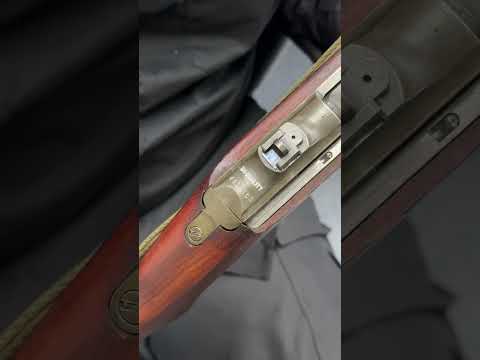
This video provides an in-depth look at a World War II era M1 Carbine paratrooper model, discussing its history, features, and significance, particularly in relation to D-Day. It details the rifle's original configuration, the functionality of its folding stock, and the historical context of its use. The video also includes a practical demonstration of shooting and zeroing the carbine, comparing its performance to modern firearms and offering insights into its value as a collector's item and historical artifact.

Quick Summary

The M1 Carbine paratrooper version features a folding stock, reducing its length to approximately 24 inches when collapsed for easier transport by airborne troops. Original 1943 Inland models are highly valued by collectors for their historical authenticity and connection to D-Day.

Chapters

  1. 00:08Introduction & D-Day Anniversary
  2. 00:31Normandy Trip Details
  3. 01:34Introducing the M1 Carbine Paratrooper
  4. 03:30M1 Carbine vs. M1 Garand History
  5. 04:01Original Case & Markings
  6. 05:06Paratrooper Features Explained
  7. 06:21Original Configuration vs. Modifications
  8. 08:01D-Day Movies & Accuracy
  9. 09:31Paratrooper Weapon Deployment
  10. 11:151943 Inland M1 Carbine Details
  11. 11:50Caliber & Accuracy
  12. 13:33Identifying Reproductions
  13. 15:19M1 Carbine Value & Investment
  14. 16:41Shooting the M1 Carbine at the Range
  15. 18:15Initial Shot Group Analysis
  16. 20:00Smell of Cordite & Shot Group Review
  17. 20:38Tom's Turn to Zero
  18. 21:59Joe's Final Shots
  19. 24:25AR-15 Comparison
  20. 27:32AR-15 Shooting & Accuracy
  21. 28:18Conclusion & D-Day Remembrance

Frequently Asked Questions

What makes the M1 Carbine paratrooper version special for airborne operations?

The M1 Carbine paratrooper version is distinguished by its folding stock, which reduces its overall length to approximately 24 inches when collapsed. This compact size allows it to fit into specialized carrying cases and makes it more manageable for paratroopers during jumps and in confined spaces.

How can one identify an original M1 Carbine paratrooper from a reproduction?

Identifying an original involves checking for specific manufacturer markings like 'Inland,' faint proof marks (e.g., 'IO'), and the condition of original parts. Reproductions often have crisp, deep stamps and may show signs of modern manufacturing or incorrect finishes on components like the leather cheek pad or brass parts.

What is the historical significance of the 1943 Inland M1 Carbine paratrooper featured in the video?

A 1943 Inland M1 Carbine paratrooper is significant because it was manufactured before D-Day, making it a genuine artifact from that era. These original configuration models, especially those by Inland, are highly sought after by collectors and historians for their authenticity and connection to World War II.

What are the key differences between the M1 Carbine and the M1 Garand?

The M1 Carbine is a lighter, shorter rifle (around 35 inches) firing a .30 Carbine round, designed for support troops and paratroopers. The M1 Garand is a larger, heavier rifle (around 44 inches) firing the more powerful .30-06 Springfield cartridge, serving as the standard infantry rifle.

More Reviews Videos You Might Like

More from Legacy Collectibles

View all →