Ultra-Premium S&W Performance Center Model 3566

Published on February 9, 2024
Duration: 12:20

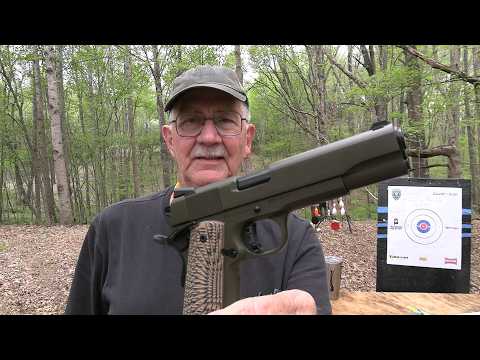
This video provides an expert-level overview of the ultra-premium Smith & Wesson Performance Center Model 3566, chambered in the rare .356 TSW cartridge. Ian McCollum, a recognized expert, details the firearm's unique features, its historical context in 1990s practical shooting sports, and the reasons for the cartridge's commercial failure. The review highlights the craftsmanship and performance-oriented design of this custom competition pistol.

Quick Summary

The Smith & Wesson Performance Center Model 3566 is a rare, ultra-premium 1911-style pistol chambered in .356 TSW. Developed for 1990s practical shooting sports, it features a 6-inch barrel, custom grips, and a unique rotating barrel bushing for enhanced accuracy. Its commercial failure was due to USPSA rule changes mandating .40 caliber for 'Major' power factor.

Chapters

  1. 00:00Introduction to the S&W Model 3566
  2. 00:40.356 TSW Cartridge History
  3. 01:569mm Major and Rule Changes
  4. 03:05Performance and Competition Origins
  5. 04:08Model 3566 Features
  6. 05:44Grips and Capacity
  7. 07:43Internal Mechanics: The Rotating Bushing
  8. 09:35The Downfall of .356 TSW

Frequently Asked Questions

What makes the Smith & Wesson Performance Center Model 3566 unique?

The S&W Performance Center Model 3566 is unique for its custom build, chambering in the rare .356 TSW cartridge, a 6-inch barrel, and advanced features like a spherical brass rotating barrel bushing, all designed for high-level competition.

Why was the .356 TSW cartridge developed?

The .356 TSW cartridge was developed in the early 1990s for practical shooting sports like USPSA and IPSC. It aimed to provide the capacity benefits of 9mm while achieving higher power factors, especially for use with muzzle brakes and compensators.

What is the significance of the rotating barrel bushing on the Model 3566?

The spherical brass rotating barrel bushing on the Model 3566 is a key accuracy feature. Unlike standard bushings, it rotates with the barrel, maintaining a consistently snug fit and reducing play for enhanced precision during firing.

Why did the .356 TSW cartridge become obsolete?

The .356 TSW cartridge became obsolete primarily due to a rule change by USPSA in 1994, which required a minimum caliber of .40 for 'Major' power factor. This change eliminated the competitive advantage the cartridge offered.

Related News

All News →

More Reviews Videos You Might Like

More from Forgotten Weapons

View all →