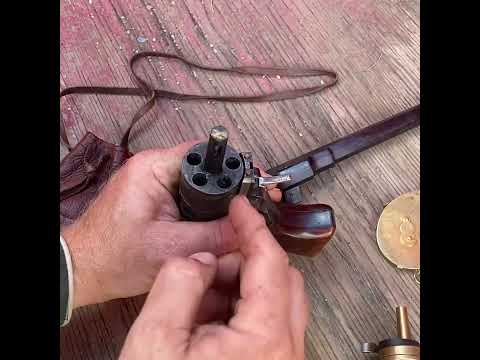
1860 Henry vs 1865 Spencer - Speed or Power?

Published on April 17, 2020
Duration: 10:48

This guide details the operational differences between the 1860 Henry and 1865 Spencer carbines, focusing on their unique loading procedures and firing techniques. The 1860 Henry offers a higher capacity and faster rate of fire due to its lever action, while the 1865 Spencer, though more powerful per shot, requires manual cocking, slowing its rate of fire. Expert insights from InRangeTV highlight the practical implications of these design choices for historical firearms enthusiasts and tactical applications.

Quick Summary

The 1860 Henry and 1865 Spencer carbines offer distinct advantages: the Henry provides a faster rate of fire (2.86s to flip target) due to its lever action and higher capacity, while the Spencer delivers superior power (1125 ft-lbs) and durability, though its manual cocking slows its practical speed.

Chapters

  1. 00:00Introduction and Ballistics
  2. 00:46The Spinner Test Concept
  3. 01:24Loading Procedures
  4. 02:19Henry Shooting Performance
  5. 03:17Spencer Shooting Performance
  6. 05:21Normalized Comparison
  7. 08:45Conclusion and Historical Context

Frequently Asked Questions

What are the key ballistic differences between the 1860 Henry and 1865 Spencer carbines?

The 1860 Henry fires a .44 Henry Rimfire (200gr, 1125 fps, 568 ft-lbs), while the 1865 Spencer uses a more powerful .56-50 Spencer (350gr, 1200 fps, 1125 ft-lbs), offering significantly more mass and energy per shot.

How do the loading mechanisms of the 1860 Henry and 1865 Spencer differ?

The 1860 Henry loads through the front of its tubular magazine. The 1865 Spencer utilizes a more advanced system, often employing a Blakeslee tube inserted into the stock for rapid rear-loading of its cartridges.

Which rifle, the 1860 Henry or 1865 Spencer, demonstrated a faster practical rate of fire?

Despite the Spencer's greater power, the 1860 Henry showed a faster practical rate of fire in tests. This was attributed to its higher capacity and smoother lever-action compared to the Spencer's slower manual cocking requirement for each shot.

What was the outcome of the normalized shooting test comparing the Henry and Spencer?

In a normalized test focusing on hitting the target's bottom plate, the times for the 1860 Henry (5.48s) and 1865 Spencer (5.47s) were nearly identical, suggesting the Spencer's heavier projectile compensated for its slower action.

Related News

All News →

More Tactical & Gear Videos You Might Like

More from InRangeTV

View all →