Battle of the Submachine Guns Pt.2: Kriss Vector and M3 Grease Gun

Published on December 5, 2014
Duration: 5:17

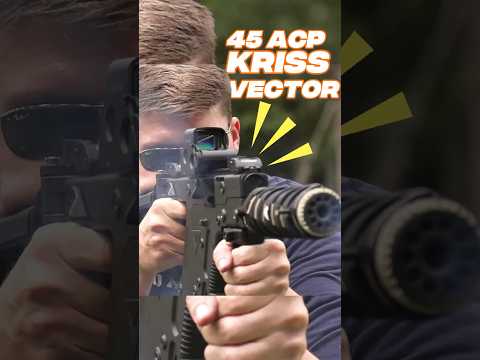
This video from Vickers Tactical features Larry Vickers comparing three .45 ACP submachine guns: the M3 Grease Gun, Kriss Vector, and Ingram MAC-10. Vickers, a veteran of Delta Force, provides expert analysis on their technical specifications, range performance, and controllability. The M3 Grease Gun is highlighted for its exceptional control due to a slow rate of fire, while the Kriss Vector showcases modern recoil mitigation technology. The Ingram MAC-10 is noted for its high cyclic rate and resulting difficulty in handling.

Quick Summary

Larry Vickers of Vickers Tactical compares the M3 Grease Gun, Kriss Vector, and Ingram MAC-10. The M3 Grease Gun excels in controllability due to its slow 450 RPM rate of fire. The Kriss Vector uses advanced recoil mitigation but struggles with its 1100 RPM rate, while the MAC-10's 1450 RPM makes it largely impractical.

Chapters

  1. 00:00M3 Grease Gun Overview
  2. 00:22M3 Technical Specifications
  3. 00:56M3 Range Performance
  4. 02:04Kriss Vector Introduction
  5. 03:00Ingram MAC-10 Comparison
  6. 03:35Kriss Vector Range Performance
  7. 04:49Final Comparison and Conclusion

Frequently Asked Questions

What are the key differences between the M3 Grease Gun and the M3A1?

The primary difference lies in the cocking mechanism. The original M3 Grease Gun uses a side cocking lever, while the M3A1 requires the operator to manually cock the bolt by inserting a finger through the ejection port.

How does the Kriss Vector manage its high rate of fire?

The Kriss Vector utilizes a patented "Vector System" which is a form of delayed blowback. This system redirects the energy of the bolt's rearward movement to mitigate felt recoil and muzzle rise, making its high cyclic rate more manageable.

Which .45 ACP SMG proved most controllable in full-auto fire at 10 yards according to Vickers Tactical?

During the test at 10 yards, the M3 Grease Gun demonstrated the most controllable full-auto fire. Its slow rate of fire (450 RPM) allowed for tighter groups compared to the Kriss Vector and Ingram MAC-10.

What is the main drawback of the Ingram MAC-10?

The Ingram MAC-10's extremely high cyclic rate of 1450 RPM makes it very difficult to control during full-auto fire, significantly limiting its practical accuracy and usefulness outside of extremely close engagements.

Related News

All News →

More Tactical & Gear Videos You Might Like

More from Vickers Tactical

View all →