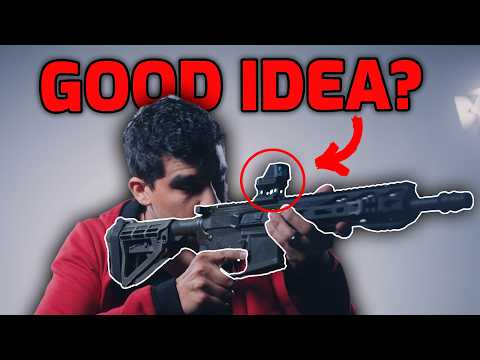
CQB Mistakes That Will Get You Killed

Published on March 4, 2025
Duration: 23:40

This video from Trench Grenade, presented by an active-duty drill sergeant, details common Close Quarters Battle (CQB) mistakes that can lead to death. It emphasizes the importance of continuous movement, situational awareness, proper firearm handling, and extensive rehearsals. Key takeaways include avoiding the 'fatal funnel,' treating windows as doorways, understanding the critical role of a handgun as a life-saver, and the necessity of pushing through engagements rather than feigning death.

Quick Summary

Critical CQB mistakes include lingering in the 'fatal funnel' doorway, neglecting windows, and becoming stagnant after clearing a sector. Always 'find work' by scanning for threats and supporting teammates. Treat windows like doorways, and understand that a handgun is your life-saver in case of rifle malfunctions. Extensive rehearsals are vital for survival.

Chapters

  1. 00:00Introduction to CQB Mistakes
  2. 03:44Story Time: Failed Breach Scenario
  3. 07:23Mistake 1: Not Finding Work
  4. 11:03Mistake 2: Windows
  5. 12:13Mistake 3: Stairs
  6. 12:50Mistake 4: Indecisiveness & Bad Leaders
  7. 14:09Mistake 5: Handgun Importance & Loading Order
  8. 16:22Mistake 6: 'Dying' Prematurely
  9. 18:11Mistake 7: Lack of Rehearsals
  10. 19:54Mistake 8: False Entry
  11. 20:31Mistake 9: Failed Breach
  12. 21:11Mistake 10: Search the Living First
  13. 23:23Summary and Call to Action

Frequently Asked Questions

What is the 'fatal funnel' in CQB and why is it dangerous?

The 'fatal funnel' refers to the doorway or entry point into a room during CQB. It's dangerous because it's a confined space where individuals are forced to stack up, making them vulnerable to enemy fire from inside the room. Standing directly in this area is a critical mistake that exposes you unnecessarily.

Why is it important to 'find work' after clearing your sector in CQB?

'Finding work' means remaining actively engaged and vigilant after your immediate sector is clear. It involves scanning for threats at different heights, checking on teammates, and collapsing your muzzle to cover potential threats. Stagnation is dangerous; you must always be looking for the next threat or way to support the team.

What is the recommended approach to windows during CQB operations?

Windows should be treated with the same caution as doorways. You must either move below them or carefully move around them using a 45-degree offset. Failing to acknowledge windows as potential observation points or ambush locations can lead to being seen or shot.

Why is a handgun considered a 'life-saver' in CQB compared to a rifle?

In CQB, firearms can malfunction, especially in chaotic environments. The handgun is considered a life-saver because it's a reliable secondary weapon that can be quickly deployed if the primary rifle fails. It's also easier to manage in extremely close quarters and is the last resort for self-defense.

What is the significance of extensive rehearsals in CQB training?

Extensive rehearsals, conducted in various simulated and real environments, are crucial for developing muscle memory, team cohesion, and efficient movement under stress. Without thousands of repetitions, individuals are not truly prepared for the chaos of CQB and are essentially building an early grave.

More Tactical & Gear Videos You Might Like

More from Trench Grenade

View all →