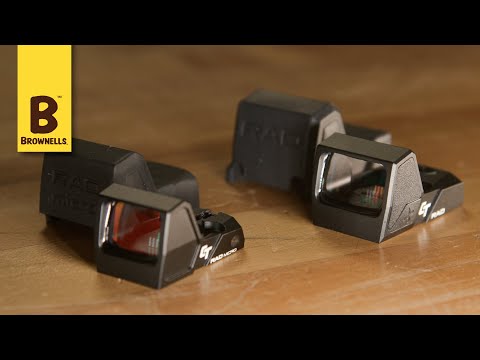
Crimson Trace RAD Series — Everything You Need To Know

Published on December 2, 2025
Duration: 4:10

This guide covers the installation and zeroing of the Crimson Trace RAD Series of red dot sights, from the micro-compact RAD Micro to the larger RAD Pro and Max Pro models. It emphasizes selecting the correct optic for the intended firearm and provides a step-by-step process for zeroing using the included tool. The information is presented with practical advice from experienced firearms instructors.

Quick Summary

The Crimson Trace RAD Series offers advanced features like 'CT Motion' (shake-to-wake) and 'CT Radiant' (auto-brightness adjustment) for efficient operation and extended battery life, ranging from 20,000 to 50,000 hours. Models include the RAD Micro for compact pistols, and the RAD Pro/Max Pro for larger firearms and rifles.

Chapters

  1. 00:09Introduction to Crimson Trace RAD Series
  2. 00:35RAD Pro and Max Pro Models
  3. 01:10Advanced Features: CT Motion and CT Radiant
  4. 02:04Range Testing and Finding the Dot
  5. 02:50Accuracy and Zeroing

Frequently Asked Questions

What are the key features of the Crimson Trace RAD Series optics?

The Crimson Trace RAD Series features 'CT Motion' for shake-to-wake activation, 'CT Radiant' for automatic brightness adjustment, and auto shut-off to conserve battery. Battery life ranges from 20,000 to 50,000 hours.

How do I choose the right Crimson Trace RAD optic for my firearm?

The RAD Micro is for micro-sized handguns. The RAD Pro is recommended for larger handguns, home defense, or competition. The RAD Max Pro is a larger optic suitable for rifles, shotguns, or turkey guns.

What is the process for zeroing a Crimson Trace RAD optic?

To zero, use the provided tool to adjust the windage and elevation screws. Follow the markers on the optic to move the point of impact left, right, up, or down until it aligns with your point of aim.

How can I quickly find the red dot on a micro pistol with a Crimson Trace RAD Micro?

On micro pistols, use the firearm's iron sights as a reference point to help quickly acquire the red dot. This technique aids in faster target acquisition.

More from Gun Talk Media

View all →