Internet Civilian Sniper Fantasy Nonsense - “Battle Rifle, SASS, Bolt Guns”

Published on December 14, 2025
Duration: 26:05

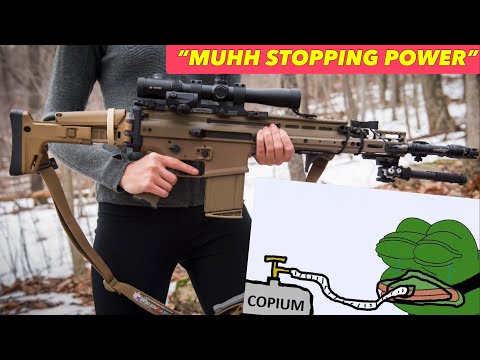
This video debunks the common internet fantasy surrounding battle rifles, semi-automatic sniper systems (SASS), and bolt-action rifles for civilian use. The speaker, a seasoned military veteran, argues that intermediate cartridges like 5.56x45mm NATO are superior for most scenarios due to their lighter weight, higher ammunition capacity, and better maneuverability. He emphasizes that real-world combat and survival prioritize survivability, mobility, and sustained engagement capability over the perceived terminal ballistics of larger calibers, which often come with significant drawbacks in weight, ammunition count, and rifle lifespan.

Quick Summary

Battle rifles and sniper systems are often impractical for civilian preparedness due to their weight, lower ammunition capacity, and shorter lifespan compared to intermediate cartridge firearms. Real-world scenarios prioritize mobility, sustained engagement, and ammunition availability, which are better served by platforms like the AR-15 in 5.56x45mm NATO.

Chapters

  1. 00:00Intro: Internet Gun Nonsense
  2. 01:56Civilian Sniper Fantasy vs. Reality
  3. 03:04Why Battle Rifles & Bolt Guns Are 'Stupid'
  4. 03:12Speaker's Military Pedigree
  5. 03:35Reconnaissance & Infantry Experience
  6. 04:23Battle Rifle Cartridge Placement
  7. 04:35Historical Context: Battle Rifles
  8. 05:05WWII: M1 Garand vs. M1 Carbine
  9. 06:14Vietnam: M14 vs. M16/CAR-15
  10. 06:52Modern Military Trends: M7 & M4A1
  11. 07:29The Case for Lightweight Weapons
  12. 07:42Semi-Automatic Sniper Systems (SASS)
  13. 08:25Battle Rifles, Bolt Guns, SASS: Are They Dead?
  14. 08:57Team Size & Firepower Limitations
  15. 10:00Sniper Teams: Observation vs. Shooting
  16. 10:40Purpose of Sniper Sections
  17. 11:03Historical Scout Origins
  18. 11:26Civilian Sniper Fantasy
  19. 11:48Sniper Qualification & Support Teams
  20. 12:53Primary Mission of Snipers
  21. 13:35Rifle Lifespan Comparison
  22. 15:16Terminal Performance vs. Logistics
  23. 16:26Key to Doomsday Gunfights: Surviving
  24. 17:32Focus: Survival Over Terminal Engagement
  25. 18:16Lightweight, More Bullets = Better
  26. 19:05Army's Historical Mistakes (M14, M7)
  27. 19:33Soldiers Want Lighter Guns
  28. 20:03Studies on Battle Rifle Ineffectiveness
  29. 20:24More Bullets, Lighter Weight
  30. 20:27Optic Usability
  31. 20:31LPVOs Are Not It
  32. 20:48True 1x Magnification for CQB
  33. 21:06What Professional Units Use
  34. 21:42Optic Usability for Battle Rifles
  35. 22:23Follow-Up Shots vs. Sniper Nonsense
  36. 22:417.62x51mm: Boom, Not Bang
  37. 23:03Terminal Ballistics Argument Debunked
  38. 23:14Magazine Capacity & Follow-Up Shots
  39. 23:42Cost of Training & Acquisition
  40. 24:17Summary: Intermediate Cartridge Advantage
  41. 24:44Conclusion & Call to Action

Frequently Asked Questions

Why are battle rifles and sniper systems generally not recommended for civilian preparedness?

Battle rifles and sniper systems are often impractical for civilian preparedness due to their weight, lower ammunition capacity, and shorter lifespan compared to intermediate cartridge firearms. Real-world scenarios prioritize mobility, sustained engagement, and ammunition availability, which are better served by platforms like the AR-15 in 5.56x45mm NATO.

What is the primary role of a sniper in modern military operations?

In modern military operations, snipers primarily serve in observation, reconnaissance, and early warning roles. They are part of larger support teams and focus on intelligence gathering rather than solely engaging targets from a distance, debunking the lone 'sniper fantasy'.

How does the lifespan of a battle rifle compare to an intermediate cartridge rifle?

Battle rifles chambered in calibers like .308 Winchester or 6.5 Creedmoor have significantly shorter barrel and component lifespans, typically lasting 2,000-3,000 rounds. In contrast, intermediate cartridge rifles like an AR-15 in 5.56x45mm NATO can often endure up to 7,000 rounds before major component wear.

What type of optics are best for close-quarters combat (CQB) scenarios?

For CQB, a true 1x magnification optic is essential for fast and accurate target acquisition. While LPVOs offer variable magnification, they can be cumbersome. Optics like Aimpoints, EOTechs, or prism sights with red dots are generally preferred for their speed and effectiveness in close engagements.

More Tactical & Gear Videos You Might Like

More from Trench Grenade

View all →