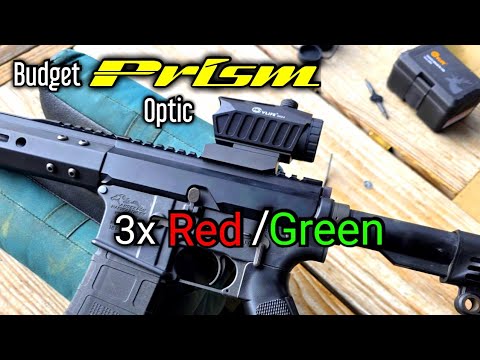
Intro to Prism Scopes: What are they Anyway?

Published on March 24, 2024
Duration: 13:20

This video provides an expert overview of prism scopes, explaining their optical principles, historical context, and advantages for specific shooters, particularly those with astigmatism. It highlights the benefits of etched reticles and discusses the trade-offs in magnification and form factor compared to other optic types. The Gideon Optics Advocate 1x is presented as a modern example with specific features and pricing.

Quick Summary

Prism scopes offer advantages like battery-free etched reticles and are ideal for shooters with astigmatism due to adjustable focus. Their folded light path allows for compact designs, though size increases significantly with magnification. Unlike red dots, they have a defined eye box, requiring specific eye placement for a clear sight picture.

Chapters

  1. 00:00Introduction to Prism Scopes
  2. 01:12Optical Design and Compactness
  3. 02:25Historical Context: Porro vs. Roof Prisms
  4. 04:03Magnification Scaling
  5. 05:41Prism vs. Red Dot
  6. 07:26Vision Correction and Oculars
  7. 08:55The 3x Magnification Sweet Spot
  8. 11:24Gideon Optics Advocate 1x

Frequently Asked Questions

What are the main advantages of prism scopes?

Prism scopes offer benefits like etched reticles that work without batteries, making them highly reliable. They are also particularly advantageous for shooters with astigmatism, as the reticle can be focused for clearer vision, and their folded light path allows for a more compact design than traditional scopes.

How do prism scopes differ from red dot sights?

Unlike red dots with "infinite" eye relief, prism scopes have a defined eye box requiring precise eye placement. Prism scopes also offer fixed magnification and etched reticles, beneficial for astigmatism and battery-free use, whereas red dots provide unlimited eye relief and are battery-dependent.

Why are higher magnification prism scopes less common?

Prism scopes increase significantly in size and weight as magnification increases. While 1x prisms are very compact, higher magnifications like 5x or 5.5x become considerably larger and heavier, making them less practical for many modern firearm platforms compared to LPVOs.

What is the ideal magnification for a prism scope?

The 3x magnification is often considered the sweet spot for prism scopes. This offers a good balance between a wide field of view, manageable weight, and cost-effectiveness, while still providing sufficient magnification for targets out to approximately 500 yards in suitable conditions.

More Tactical & Gear Videos You Might Like

More from Forgotten Weapons

View all →