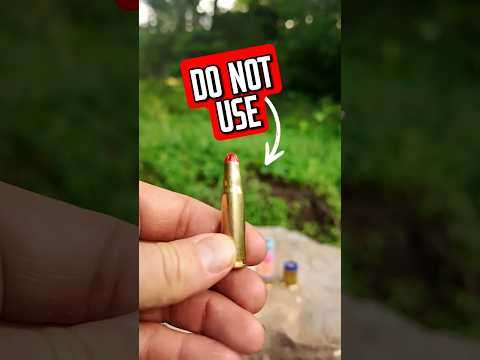
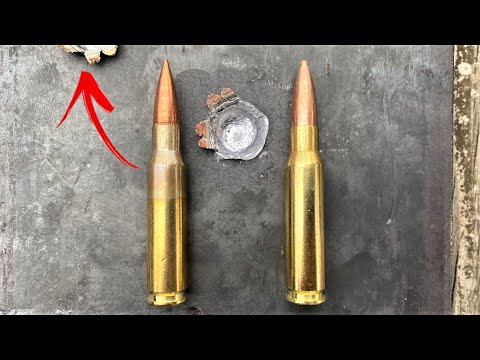
Less Lethal Ammo Is Surprisingly Lethal?

Published on April 18, 2025
Duration: 14:58

This video from Banana Ballistics explores the surprising lethality of "less lethal" shotgun ammunition. Through rigorous testing with ballistic gel and plywood, the host demonstrates that rounds like bean bags and high-velocity .410 rubber buckshot can cause significant damage, challenging the common perception of these rounds as entirely non-lethal. The testing highlights the importance of understanding ammunition performance beyond its intended classification.


Quick Summary

Banana Ballistics conducted a rigorous test of "less lethal" shotgun ammunition, revealing that rounds like bean bags and high-velocity .410 rubber buckshot can be surprisingly lethal. Using ballistic gel and plywood targets, the experiment demonstrated significant penetration and impact force, challenging the perception of these rounds as entirely safe.

Chapters

  1. 00:00Introduction: Less Lethal Test
  2. 00:10Hornet Nest & Double-Insult Rounds
  3. 01:4812 Gauge vs. .410 Rubber Buckshot
  4. 04:56Rubber-Bucky & Triple Black Ball
  5. 07:35Rubber Star, Slug, and Baton
  6. 11:41Bean Bag Rounds
  7. 14:05Conclusion: Most Lethal Less Lethal

Frequently Asked Questions

What makes "less lethal" ammunition potentially dangerous?

"Less lethal" ammunition can still cause significant injury or death due to high velocity, projectile weight, and impact force. As demonstrated in the video, rounds like bean bags and high-velocity .410 rubber buckshot can cause deep penetration and substantial damage to targets like ballistic gel and plywood.

Which "less lethal" shotgun rounds were found to be the most impactful?

According to the testing in the video, bean bag rounds were identified as the most impactful "less lethal" option. They caused the most significant damage to plywood targets and deep displacement in ballistic gel. High-velocity .410 rubber buckshot and the "Rubber-Bucky" round were also noted for their considerable performance.

How does .410 rubber buckshot compare to 12-gauge rubber buckshot?

The video's comparison showed that .410 rubber buckshot, specifically the Lightfield Home Defender at 1400 FPS, had a significantly higher velocity and achieved deeper penetration in ballistic gel (2 3/8 inches) than the tested 12-gauge rubber buckshot (750 FPS).

What testing methods were used to evaluate "less lethal" ammunition?

The host utilized calibrated ballistic gel to measure penetration depth and simulate tissue damage, alongside 3/4 inch plywood targets to assess impact force and structural damage. Velocity data was also compared for different rounds.

More Tactical & Gear Videos You Might Like

More from Banana Ballistics

View all →